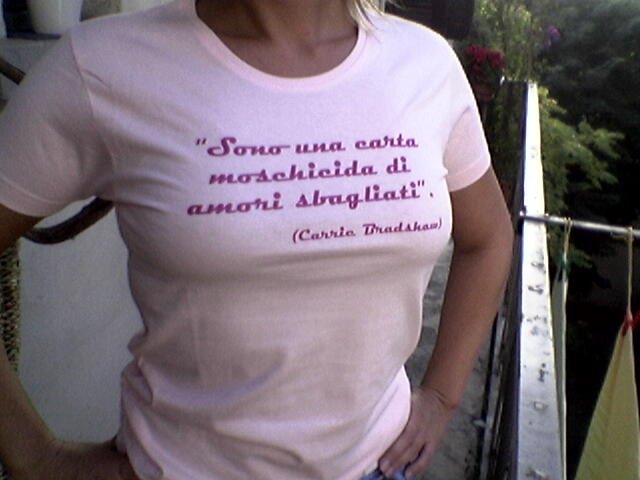
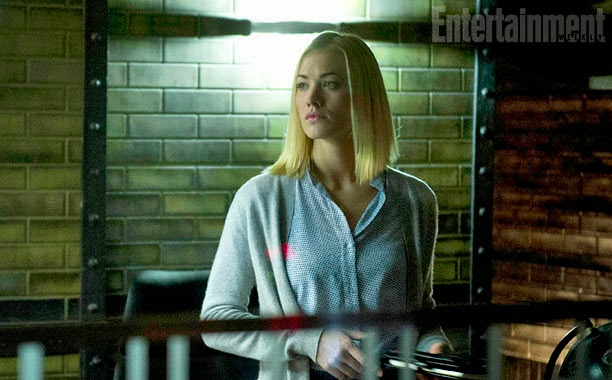
GOSSIP - 100 di questi "Glee"! Lea Michele e Naya Rivera in gran spolvero per celebrare il centesimo episodio della serie di Murphy. Chi preferite?
mercoledì 19 marzo 2014
Etichette:
Glee,
GOSSIP,
Lea Michele,
look,
Naya Rivera,
Ryan Murphy,
sexy
Mandata email x nuova edizione all'assessore di Milano alla Cultura, Filippo Del Corno: attendiamo. #TF10
— Telefilm Festival (@TelefilmFest) 18 Marzo 2014
L'EDICOLA DI LOU - Stralci, cover e commenti sui telefilm dai media italiani e stranieri
UPROXX
10 motivi (meno uno) per non perdersi "The Americans"
The Americans is three episodes into its second season on FX, and so far, the series has only improved upon an already stellar first season. It’s dark, it’s stylistic, it’s emotionally complicated, and it is riveting drama. Unfortunately, despite being an incredibly sexy show at times, The Americans often doesn’t get the kind of buzz that The Walking Dead or Game of Thrones or True Detective gets, even if it is often as good as those other dramas. I’m not entirely sure why. Maybe because it’s not a Sunday night show. Or maybe because there isn’t a fantasy element involved, or zombies, or sneering douchebag villains.
I wish that The Americans were more talked about on the Internet. I wish it was appointment viewing. I wish that it got the appreciation that it deserves. I wish that I could convince people that haven’t given it a chance yet to tune in, catch up (the first season is on Amazon), and make memes and mash-ups and GIFs and develop theories so that the Internet will jump on board, so that it can become one of the most discussed shows every Wednesday night and Thursday morning, and so that we can all share it together. Here’s the best 9 reasons why.
1. Because It Involves Anti-Villains — If you’re tired of the glut of anti-hero dramas on television, The Americans offers a nice twist: The Anti-Villain. Elizabeth and Phillip Jennings are Commie spies, and as capitalist Americans, we shouldn’t be rooting for them. But we do. Why? Because The Americans isn’t about the interest or the motivations of the character, it’s about the characters themselves, who we become intensely invested in.
2. Because It’s the Show Homeland Wanted to Be — Homeland was at its best in the first season, when we found ourselves rooting for Nicholas Brody, even though we knew he was probably a terrorist. The Americans is the Cold War equivalent of that, only the daughter in this equation is much less annoying than Dana Brody, and the writers don’t have any intention of flipping the script by turning The Jennings into FBI informants. In fact, one of the most compelling conflicts in The Americans is the tension between the Jennings’ duty to Mother Russia and their obligation to their American children, who essentially embody American suburban values.
3. Because It’s a Great History Lesson — I happen to know a writer on this show, and I happen to know that she spent a lot of time studying the period, which not only helps the writing staff get the details right, but they manage to work in bits and pieces of actual Cold War history into the show. It’s a fascinating examination of a period most of us were too young to experience, and that the television and film world barely explores outside of stereotypical Communist villains. The Americans humanizes the bad guys.
4. Because of the Wigs — There are so many fantastic wigs in this show. Does it actually disguise the Jennings? Not particularly, but they are ridiculously fun.
UPROXX
10 motivi (meno uno) per non perdersi "The Americans"
The Americans is three episodes into its second season on FX, and so far, the series has only improved upon an already stellar first season. It’s dark, it’s stylistic, it’s emotionally complicated, and it is riveting drama. Unfortunately, despite being an incredibly sexy show at times, The Americans often doesn’t get the kind of buzz that The Walking Dead or Game of Thrones or True Detective gets, even if it is often as good as those other dramas. I’m not entirely sure why. Maybe because it’s not a Sunday night show. Or maybe because there isn’t a fantasy element involved, or zombies, or sneering douchebag villains.
I wish that The Americans were more talked about on the Internet. I wish it was appointment viewing. I wish that it got the appreciation that it deserves. I wish that I could convince people that haven’t given it a chance yet to tune in, catch up (the first season is on Amazon), and make memes and mash-ups and GIFs and develop theories so that the Internet will jump on board, so that it can become one of the most discussed shows every Wednesday night and Thursday morning, and so that we can all share it together. Here’s the best 9 reasons why.
1. Because It Involves Anti-Villains — If you’re tired of the glut of anti-hero dramas on television, The Americans offers a nice twist: The Anti-Villain. Elizabeth and Phillip Jennings are Commie spies, and as capitalist Americans, we shouldn’t be rooting for them. But we do. Why? Because The Americans isn’t about the interest or the motivations of the character, it’s about the characters themselves, who we become intensely invested in.
2. Because It’s the Show Homeland Wanted to Be — Homeland was at its best in the first season, when we found ourselves rooting for Nicholas Brody, even though we knew he was probably a terrorist. The Americans is the Cold War equivalent of that, only the daughter in this equation is much less annoying than Dana Brody, and the writers don’t have any intention of flipping the script by turning The Jennings into FBI informants. In fact, one of the most compelling conflicts in The Americans is the tension between the Jennings’ duty to Mother Russia and their obligation to their American children, who essentially embody American suburban values.
3. Because It’s a Great History Lesson — I happen to know a writer on this show, and I happen to know that she spent a lot of time studying the period, which not only helps the writing staff get the details right, but they manage to work in bits and pieces of actual Cold War history into the show. It’s a fascinating examination of a period most of us were too young to experience, and that the television and film world barely explores outside of stereotypical Communist villains. The Americans humanizes the bad guys.
4. Because of the Wigs — There are so many fantastic wigs in this show. Does it actually disguise the Jennings? Not particularly, but they are ridiculously fun.
5. Because of the Soundtrack — So much of television and film that goes back to the 80s often focuses on the cheesy music of the era, but The Americans
tends to include the darker, heavier songs of the early 80s in its
soundtrack. In other words, the good stuff. There’s quite a bit of early
Peter Gabriel, there’s The Cure, the Squeeze, Pete Townshend, and
Roberta Flack. It’s fantastic, period-perfect, moody and often haunting
music that’s not a bunch of Cyndi Lauper or a series of one-hit wonders
(not that there’s anything wrong with that).
6. Because of the Writing — As great as the first season was, the writing is even better in the second season. It’s a show that takes its time. It doesn’t aim for huge, shocking episodes. It doesn’t throw in a lot of huge twists. It creates tension, then it slowly turns the screws, and it doesn’t release that tension every other episode with a killing spree designed to provide relief. Deaths are matter of fact, a sometimes necessary evil, but all they do is ratchet the tension, increasing the likelihood that the Jennings will be caught.
7. Because Sexy — The Americans is a very stylistic, and sometimes, dead sexy drama. Think Jennifer Garner in Alias, only with a more frequent (and more graphic) sex scenes (ironically, when J.J. Abrams cast Alias, his prototype was a kick-ass Felicity). Other times, that sexiness is awkward. For instance, when the daughter walks in on her parents in full-on 69 mode, a first for television (which happened in the same episode that Keri Russell’s character was also involved in a threesome).
6. Because of the Writing — As great as the first season was, the writing is even better in the second season. It’s a show that takes its time. It doesn’t aim for huge, shocking episodes. It doesn’t throw in a lot of huge twists. It creates tension, then it slowly turns the screws, and it doesn’t release that tension every other episode with a killing spree designed to provide relief. Deaths are matter of fact, a sometimes necessary evil, but all they do is ratchet the tension, increasing the likelihood that the Jennings will be caught.
7. Because Sexy — The Americans is a very stylistic, and sometimes, dead sexy drama. Think Jennifer Garner in Alias, only with a more frequent (and more graphic) sex scenes (ironically, when J.J. Abrams cast Alias, his prototype was a kick-ass Felicity). Other times, that sexiness is awkward. For instance, when the daughter walks in on her parents in full-on 69 mode, a first for television (which happened in the same episode that Keri Russell’s character was also involved in a threesome).
8. Because Keri Russell is Seriously Bad Ass — If you only know Keri Russell from Felicity
and other similar roles, you may be surprised by how adept she is in
the action scenes. What’s perhaps even more remarkable is how sly she is
about it: She doesn’t walk into a room and punch out three guards.
She’ll sneak up on someone one in some nice lingerie and then, at their
most vulnerable, she will SLASH THEIR F***KING THROAT. And maybe
sometimes, she’ll just KICK SOMEONE’S HEAD THROUGH A WALL. She’s
ruthless and cold.
9. Because of the moral ambiguity — There are no good guys or bad guys in The Americans.
There are simply people doing their jobs, serving the interests of
their own countries. The interests aren’t always good — on either the
American or the Russian side — but the intentions of the characters are
pure. We’re exploring the lives of bit players in a huge, decades long
war. There are no individuals attempting to build empires or gain the
throne. In fact, for the Jennings, it’s just the opposite: They want to
serve their country with as little disruption to their suburban lives as
possible. Their aspirations are nationalistic, not individual.
martedì 18 marzo 2014
NEWS - La "Nymphomaniac" Connie Nielsen fa parlare italiano "The Following"! Nonostante sia danese di nascita, Connie Nielsen – interprete dell’inquietante/psicopatica Lily Gray nella 2° stagione inedita di “The Following” (in anteprima esclusiva su Premium Crime ogni lunedì) – vanta trascorsi italiani non da poco. Dopo il debutto a 18 anni da modella, si è spostata in Italia, dove ha vissuto alcuni anni tra Roma e Milano. Nel capoluogo lombardo ha conseguito un master class con Lydia Styx al Piccolo Teatro e ha allacciato una relazione con l’attore italiano Fabio Sartor, conosciuto sul set della serie tv “Colletti bianchi” del 1988 alla quale l’attrice ha partecipato; dall’unione dei due è nato poi il figlio Sebastian prima di trasferirsi definitivamente negli Stati Uniti, tra New York e San Francisco. Qui ha trovato fortuna al cinema in pellicole mainstream come “Il Gladiatore” (Oscar come “miglior film” nel 2001), opere europee (francesi in primis), cineasti DOC (come Brian De Palma che l’ha voluta in “Mission to Mars”), festival internazionali (“miglior attrice” nel 2004 a San Sebastian per “Non desiderare la donna d’altri”) o ultimamente nello scandaloso “Nymphomaniac” di Lars Von Trier.
lunedì 17 marzo 2014
NEWS - E' uno Scanda-Lohan! Appena uscita fresca fresca dal rehab Lindsay si prende (in giro: in un cameo in "2 Broke Girls") e si riprende (in un docu-reality sulla sua vita spericolata)
La vita e la carriera all’insegna degli scandali di Lindsay Lohan segnano un nuovo capitolo. L’attrice che ultimamente ha fatto parlare i gossip per i suoi stravizi ha interpretato sé stessa in una docu-reality intitolato per l’appunto “Lindsay” che ha acceso i riflettori a partire dalla sua uscita dal recentissimo rehab annunciato tra l’altro nel salotto di Oprah Winfrey. Per le 8 puntate, Lohan ha percepito un compenso di 8 milioni di dollari. La prima puntata, in onda sul neonato canale via cavo OWN, ha registrato 693.000 spettatori (per il network si è registrato un incremento di audience del 231%). Nel corso della prima puntata, l’attrice ha raccontato di sentirsi “prigioniera dei paparazzi” e di aver “trovato una calma interiore”, di “aver provato qualsiasi esperienza” e di sapere che “questa è l’ultima possibilità, l’ultima chance per dimostare chi sia e cosa sappia fare”. Nel frattempo Lindsay Lohan si prenderà in giro partecipando da guest-star nell'episodio della 3° stagione di “2 Broke Girls” in onda in America il 14 aprile (a seguire, in Italia, su Joi che trasmette la sit-com a poche settimane di distanza al martedì). L’attrice interpreterà Claire Guinness, una futura sposa che chiede alle protagoniste Max (Kat Dennings) e Caroline (Beth Behrs) di preparare la torta matrimoniale ma che denota un’indecisione fuori dal comune. Si tratta dell’atteso ritorno in scena da attrice di Lohan dopo il chiaccherato “The Canyons” di Paul Schrader al cinema nel 2013 al fianco del pornoattore James Deen (quest’ultimo ha definito la partner di set, con la quale ha intrapreso roventi scene di sesso, “una bambina capricciosa”) . Prossimamente l’attrice sarà impegnata a tutto tondo nel film “Inconceivable”, opera che la vedrà in prima fila sia da protagonista che da produttrice, come ha annunciato lei stessa all’ultimo Sundance Film Festival.
domenica 16 marzo 2014
L'EDICOLA DI LOU - Stralci, cover e commenti sui telefilm dai media italiani e stranieri
NEW YORK TIMES
Vince Gilligan, dopo aver ideato "Breaking Bad", si concede cameo in "Community"
NEW YORK TIMES
Vince Gilligan, dopo aver ideato "Breaking Bad", si concede cameo in "Community"
After bringing his AMC series “Breaking Bad” to its highly praised conclusion and earning an Emmy Award for outstanding drama, creator Vince Gilligan probably could have done anything he wanted for his next act.
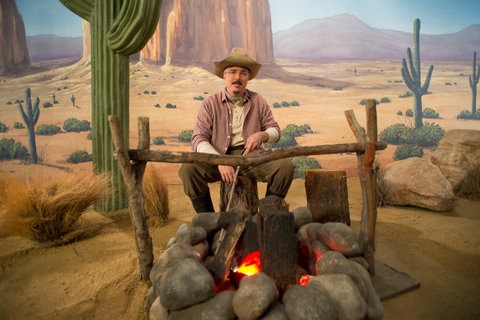
Unexpectedly, he opted for a cameo role in the NBC comedy “Community.” At the invitation of that show’s creator, Dan Harmon, Mr. Gilligan will make his professional on-camera acting debut in Thursday’s episode, playing the host of a vintage VCR game
with an Old West theme and some deeply confusing rules. (It spoils
nothing to add that Mr. Gilligan’s character also appears, in a slightly
different capacity, in a closing-credits scene with Gina
Gershon.)
Mr. Gilligan, who is now preparing the “Breaking Bad” spinoff “Better Call Saul”
for a November debut, spoke recently about his visit to “Community.” In
these edited excerpts from that conversation, he talks about what he’s
learned from his introduction to acting.
Q.
Is this the beginning of your transition into acting?
A.
Yes. It’s a steppingstone to porn, which is
actually my first true love. [Laughs] Everybody in their heart of hearts
wishes they could be Errol Flynn or Harrison Ford, swashbuckling away
in a big movie. I always knew I couldn’t act and I couldn’t sing, so I
never really tried either. But out of the blue, Dan Harmon called up and
said, would you like to do a guest shot on “Community”? And it was
irresistible. I couldn’t say no.
Q.
How well did you know Dan when he asked you to do this?
A.
Not well. We had met at an Emmy party,
probably two years before. He’s a great storyteller and a fun guy to
hang around with. But he’s busy, I was busy finishing up “Breaking Bad.”
And that’s the way the business is. You have a great time talking to
someone and then you don’t see them again for five years.
Q.
What was he like to work with on your “Community” scenes?
A.
As one would expect, “Community” being his
brainchild, he’s a hilariously funny guy. Exactly as I was on the set
on of “Breaking Bad,” he looked pretty tired the day I saw him on
“Community,” but he was a wonderful host.
Q.
Did this turn out to be a deceptively challenging assignment?
A.
I was so nervous because – not that it needs
to be stressed for anyone who will watch the episode – I am no actor. I
studied my lines. I tried to picture how Bryan Cranston or Aaron Paul
would do it. But I got there and I said to Dan, “Are you sure about
this? There’s a very good possibility I may be unwatchably terrible.”
And he said, “We know that, too. [Laughs] The whole point of the
character you’re playing is that he’s a bad actor. So the worse you are,
perhaps the funnier it would be.”
Q.
You play the character with a deliberately
silly Southern accent. Was this a skill you’ve always had, or one you
developed specifically for the role?
A.
I swear to God, I did do my homework, however it comes across. I’d watch Gabby Hayes videos and I’d watch Walter Huston in “The Treasure of the Sierra Madre,”
I’d be trying to imitate their voices. I’m not much of a mimic,
unfortunately, but I had my upbringing in Virginia to fall back on. I
used to have much more of a Southern accent than I do now — it seems to
have gone away inadvertently after having lived here in Los Angeles for
20 years. I had to dig deep and pull it out from wherever it was hiding.
Q.
So there’s an element of self-mockery in the performance?
A.
[Laughs] Oh yeah. Even in the South, there’s different substrates of hillbillies and white trash.
Q.
Were you bummed that you didn’t get to share a scene with your former “Breaking Bad” co-star Jonathan Banks, who’s now on “Community”?
A.
He is such a sweetheart. He’s so crusty on
the outside but he’s like a marshmallow on the inside. He knew how
nervous I was and that I had never acted. And when he wrapped for the
day, instead of driving home, which I’m sure he would have preferred to
do, he hung around to run lines with me off camera. That made me more
comfortable.
Q.
Did you learn anything from your acting experience that made you see your work as a producer or a director in a new light?
A.
I learned viscerally what I already knew
intellectually. I know acting is a hard gig, but actually having 30 or
40 union crew members standing around, staring at you — they’re
professionals and they’re expecting you to know your lines and not make
them go home a half-hour or an hour or two hours later than they
normally would. So you feel that pressure of getting it right in the
first take.
Q.
Was it any more difficult in the scene you share with Gina Gershon?
A.
Gina Gershon’s an excellent actress, and man,
just smoking hot. And just a very sweet, nice person. She very handily
grasped the fact that I had not done this before. [Laughs] And I got to
hug her over and over again, take after take, which was very enjoyable.
I’m glad my girlfriend, Holly, was not there. That would have put a
damper on things. [Laughs]
Q.
After this experience, are you thinking about
how you might more substantially re-enter the world of scripted
entertainment, or are you still kicking back and considering your
options?
A.
I definitely am not giving up my job. We’re plugging away on “Better Call Saul,”
I’m here in the writers’ offices as we speak, and we’re breaking our
third episode out of our 10-episode first season. Peter Gould and I,
we’re running it together, and we’re having a really good partnership.
Q.
So you were eager to re-immerse yourself in the world of “Breaking Bad”?
A.
Oh, yeah. I hadn’t written a “Breaking Bad”
episode since the final episode about a year ago, and then we had to
shoot it and edit it all, then there was the victory lap. It didn’t take
long for me to start to miss the world of “Breaking Bad,” and I very
much want “Better Call Saul” to get off on the best foot possible. I’ll
be here every day, and directing the first episode and co-writing the
first episode with Peter. I’ll be as helpful as I can at the beginning
of Season 2, putting in a couple weeks full-time with Peter, and then
gradually pulling back from it. Because Peter is more than ready to run
his own show. And then I’ll look for a movie to do or create another TV
show.
sabato 15 marzo 2014
giovedì 13 marzo 2014
GOSSIP - Avanti, Mars! Krysten Ritter, al cinema con "Veronica Mars", (ri)parla della chiusura di "Non fidarti..." e mostra una linea invidiabile su tacchi tartanKrysten Ritter shows off her gorgeous figure as she arrives at the SiriusXM Studios for an interview on Monday (March 10) in New York City. The 32-year-old actress promoted her new Veronica Mars movie that day in the Big Apple. Krysten recently opened up to USA Today about her former ABC show Don’t Trust the B—- in Apartment 23. “You never know what’s going to hit, what’s going to work,” Krysten said, adding that the show “did great things and built a great family for me. I’m so grateful. I guess I make myself a little bit less crazy now. You gotta just show up, keep your head down, do great work, be a good person. You can’t control that other stuff.”
FYI: Krysten is wearing a Jonathan Simkhai top and skirt with Mango shoes.
mercoledì 12 marzo 2014
NEWS/L'EDICOLA DI LOU - You GOT the power! "Vanity Fair" USA dedica la cover alla band di "Game of Thrones" (a quando una simile nell'edizione italiana che schiaffa in copertina gente come Arisa, Littizzetto o Vittoria Puccini?)
The cast of Game of Thrones – Emilia Clarke, Kit Harington, Nikolaj Coster-Waldau, Lena Headey, and Peter Dinklage – grace the cover of Vanity Fair‘s April 2014 issue, on newsstands March 13.
Here is what the show’s team had to share with the mag:
Peter on his character: “It just seemed like something I had never come across before, especially in the fantasy genre, which I still refuse to call this, even though we have dragons. It is just something that I was so eager to embrace, because it turned the dwarf stereotype in the fantasy genre on its head. And he’s a hero at the same time.”
Author George R.R. Martin on having child actors: “This is a serious concern. Maisie Williams was the same age as Arya when it started, but now Maisie is a young woman and Arya is still 11. Time is passing very slowly in the books and very fast in real life.”
Co-creator David Benioff on the excessive sex and female nudity: “I’m sitting here next to my wife [actress-playwright Amanda Peet] and I just asked her. She says: ‘What matters is whether there are great roles for women of all ages and types and whether the women in the story actually propel the plot. If they take their clothes off while they do that, so be it.’ I don’t know if she’s the right person to ask: she’s showing her tits tomorrow in her own HBO show.”
For more from the Game of Thrones team, visit VanityFair.com!
The cast of Game of Thrones – Emilia Clarke, Kit Harington, Nikolaj Coster-Waldau, Lena Headey, and Peter Dinklage – grace the cover of Vanity Fair‘s April 2014 issue, on newsstands March 13.
Here is what the show’s team had to share with the mag:
Peter on his character: “It just seemed like something I had never come across before, especially in the fantasy genre, which I still refuse to call this, even though we have dragons. It is just something that I was so eager to embrace, because it turned the dwarf stereotype in the fantasy genre on its head. And he’s a hero at the same time.”
Author George R.R. Martin on having child actors: “This is a serious concern. Maisie Williams was the same age as Arya when it started, but now Maisie is a young woman and Arya is still 11. Time is passing very slowly in the books and very fast in real life.”
Co-creator David Benioff on the excessive sex and female nudity: “I’m sitting here next to my wife [actress-playwright Amanda Peet] and I just asked her. She says: ‘What matters is whether there are great roles for women of all ages and types and whether the women in the story actually propel the plot. If they take their clothes off while they do that, so be it.’ I don’t know if she’s the right person to ask: she’s showing her tits tomorrow in her own HBO show.”
For more from the Game of Thrones team, visit VanityFair.com!
NEWS - Oh Cara! La top-model Delevingne, fidanzata con la "lost" Michelle Rodriguez, debutta in una serie UKCara Delevingne and her rumored girlfriend Michelle Rodriguez arrive home after a late night out on Thursday (March 6) in London, England. The pair was seen out and about the night before attending Beyonce‘s concert.
Cara's just booked a role in the new UK series Timeless and will be making her television acting debut! Tim Frith’s drama is part of Sky Arts’ comedy and drama series Playhouse Presents.
“It’s a really touching story and I’m really honoured to be working with Sylvia in a one-off production for Playhouse Presents,” Cara told Vogue UK. “This will be my first time working in television drama and I am excited by the opportunity.” The 21-year-old supermodel will star as Chloe, a young woman who is looking after her great-grandmother Alice, played by Syms, while her mother and grandmother are away on a cruise. The unlikely pair bond across the generation gap after Chloe is given devastating news about her iance, a soldier serving in Afghanistan. The story is described as an “engaging tale of love, loss and hope.” The role marks the fulfilment of a long held ambition for Delevingne, who has said that acting is her real passion: “Modelling is a great job, and I appreciate everything it has brought me, but it’s not my passion. As far back as I can remember I have wanted to act.”
martedì 11 marzo 2014
NEWS - Prima del Creato, Dio creò la donna...anzi la prima delle "Girls"! Lena Dunham rilegge la Bibbia al "Saturday Night Live"
GOSSIP - Un, due, tre! Chi è la vera Anna Faris, matta-attrice di "Mom"? Chi è la vera Anna Faris? L’interprete esplosiva di “Mom”, una delle sit-com più detonanti dei luoghi comuni familiari in arrivo su Joi dal 28 marzo, è stata avvistata nelle scorse settimane in 3 fasi differenti, ciascuna rappresentativa della sua multiforme personalità alla quale dà vita anche sul set.
1) look grunge da sopravvissuta alla crisi economica a West Hollywood, subito dopo esser andata a farsi le unghie (si suppone per pochi spiccioli), con jeans stracciati che manco Jena Plinsky di “1997 fuga da New York” approverebbe oggi come oggi.
2)
elegantissima sui Red Carpet dei Grammy Awards e della prima di “The Lego
Movie”, al primo evento in abito stile Morticia degli Addams, nel secondo con
tubino a scacchi anni ’80 degno delle coriste degli Human League 3) sexy come nessuna secondo i lettori della rivista “Glam’Mag”, i quali a marzo 2014 l’hanno eletta “attrice più attraente dell’anno” (forse ricordando il celebre servizio fotografico di qualche tempo fa su “GQ”…).
lunedì 10 marzo 2014
L'EDICOLA DI LOU/GOSSIP - Stralci, cover e commenti sui telefilm dai media italiani e stranieriCOSMOPOLITAN
Naya goes Cosmo!
Newly engaged with a career that is hotter than ever, Glee star Naya Rivera shows us how she gets what she wants. On a chilly Los Angeles morning, Naya Rivera arrives at the Coffee Bean and Tea Leaf looking every inch the star in a black wool DVF coat over a camouflage print dress, Saint Laurent boots, and oversize Chanel sunglasses that never come off. Her thick black hair, which has been blown straight, cascades over her shoulders. What really turns heads, though, is her ginormous engagement ring, a cushion-cut sparkler, which looks like a six-carat stunner, surrounded by a halo of smaller diamonds. In October, her boyfriend, rapper Sean Michael Anderson, a.k.a. “Big Sean,” proposed, and Rivera is still basking in the excitement of her news. “I think he’s going to be an amazing husband, and he’ll make a great father someday,” she gushes. “He’s so kind to people, but he also wears the pants in our relationship, which I love. We Latinas are very independent and strong, so it’s even sweeter that I’ve found somebody who can let me out of that role for a minute.”
The two met in the most modern of ways: on Twitter. Bored at work, Rivera decided to follow the rapper, whom she’d recently admired in a sexy GQ spread. Anderson, who was touring overseas at the time, was alerted to the nod by her million-plus followers, as well as his assistant, an avid Glee fan who also happens to be Puerto Rican. “She told him, ‘I’m Puerto Rican, she’s Puerto Rican; it sounds like you’d have so much fun with her,’” Rivera recalls. Anderson pulled up an episode of Glee to check Rivera out, liked what he saw, and sent her a private message. At first, Rivera was skeptical that he was the real thing: “Even though he had the verified check mark, I kept thinking, this could be a fan. I have to be careful what I say.”
On indulging her domestic side:
“Latinas are really great nurturers who are great to our men; we love hard and we love to cook. The other morning I woke up and was like, ‘I need china — this table needs to be set all the time!’ Focusing on those things is where I’m at right now.”
sabato 8 marzo 2014
giovedì 6 marzo 2014
NEWS - Da qui all'Infinity! Mediaset non è più sola nello streaming: arriva Sky on Demand (ex "The River")
Dallo sport ai film, dal tg alle serie tv. Sky
si prepara a lanciare la sua offerta streaming aperta a tutti, con il
nome di Sky Online. E così entro fine marzo si potrà accedere alla
programmazione del network da computer, dai tablet più venduti (Apple e
Samsung), da smart tv (i Samsung di ultima generazione), da PlayStation 3
e 4, e dall'estate anche da Xbox 360 e Xbox One. La mossa, attesa, era
inevitabile. Segue quella di Mediaset che ha appena lanciato Infinity a
9,99 euro al mese e si aggiunge agli altri servizi che nel nostro Paese
si stanno letteralmente moltiplicando. Chili Tv, Cubovision di Telecom,
Apple Tv, Play di Google, Video Unlimited di Sony, Xbox Video di
Microsoft, tanto per citare i principali. Ma soprattutto precede lo
sbarco tanto temuto di Netflix, da ottobre visibile nei Paesi Scandinavi
oltre che negli Usa e in Inghilterra, e di Amazon Video che in teoria
avrebbe dovuto aprire i battenti anche da noi già nel corso del 2013.
Conosciuto precedentemente come "River", Sky Online si basa però su un modello diverso da quello di Netflix e simili. Salvo alcune serie tv originali come House of Cards, Netflix per 9,99 euro al mese offre un catalogo di titoli on demand spesso datati. Sky Online invece è una finestra ibrida che unisce una parte della programmazione Sky ad una libreria di film e telefilm relativamente ristretta. Differente da Sky Go, destinato a chi è già cliente e che ha molti più canali, Online è fatto di pacchetti singoli mensili venduti ad un costo ancora da confermare ma che presumibilmente sarà inferiore ai 20 euro al mese. Ovvero al prezzo dell'abbonamento base da parabola. Per non cannibalizzare quello che è il business principale del network, la somma dei tre pacchetti avrà un prezzo maggiore degli equivalenti sottoscritti in maniera tradizionale. In pratica Sky Online è un modo per raggiungere quel pubblico che ogni tanto ha voglia di guardare una certa serie tv, un film o una partita di calcio, ma non intende o non ha modo di istallare una parabola.
Serie Tv. Sarà il pacchetto più vantaggioso rispetto al prezzo e consentirà di accedere in diretta alle serie trasmesse da Fox (Fox, Fox Crime, Fox Life), mentre on demand saranno a disposizione intere stagioni di telefilm americani o prodotti dalla stessa Sky. Si va da The Following, Blacklist a Walking Dead, fino a American Horror Story, Grey's Anatomy, Game of Thrones, Boardwalk Empire e (ironia della sorte, verrebbe da dire) House of Cards di Netflix. Senza dimenticare Romanzo Criminale e Faccia d'Angelo.
Dallo sport ai film, dal tg alle serie tv. Sky
si prepara a lanciare la sua offerta streaming aperta a tutti, con il
nome di Sky Online. E così entro fine marzo si potrà accedere alla
programmazione del network da computer, dai tablet più venduti (Apple e
Samsung), da smart tv (i Samsung di ultima generazione), da PlayStation 3
e 4, e dall'estate anche da Xbox 360 e Xbox One. La mossa, attesa, era
inevitabile. Segue quella di Mediaset che ha appena lanciato Infinity a
9,99 euro al mese e si aggiunge agli altri servizi che nel nostro Paese
si stanno letteralmente moltiplicando. Chili Tv, Cubovision di Telecom,
Apple Tv, Play di Google, Video Unlimited di Sony, Xbox Video di
Microsoft, tanto per citare i principali. Ma soprattutto precede lo
sbarco tanto temuto di Netflix, da ottobre visibile nei Paesi Scandinavi
oltre che negli Usa e in Inghilterra, e di Amazon Video che in teoria
avrebbe dovuto aprire i battenti anche da noi già nel corso del 2013.Conosciuto precedentemente come "River", Sky Online si basa però su un modello diverso da quello di Netflix e simili. Salvo alcune serie tv originali come House of Cards, Netflix per 9,99 euro al mese offre un catalogo di titoli on demand spesso datati. Sky Online invece è una finestra ibrida che unisce una parte della programmazione Sky ad una libreria di film e telefilm relativamente ristretta. Differente da Sky Go, destinato a chi è già cliente e che ha molti più canali, Online è fatto di pacchetti singoli mensili venduti ad un costo ancora da confermare ma che presumibilmente sarà inferiore ai 20 euro al mese. Ovvero al prezzo dell'abbonamento base da parabola. Per non cannibalizzare quello che è il business principale del network, la somma dei tre pacchetti avrà un prezzo maggiore degli equivalenti sottoscritti in maniera tradizionale. In pratica Sky Online è un modo per raggiungere quel pubblico che ogni tanto ha voglia di guardare una certa serie tv, un film o una partita di calcio, ma non intende o non ha modo di istallare una parabola.
Serie Tv. Sarà il pacchetto più vantaggioso rispetto al prezzo e consentirà di accedere in diretta alle serie trasmesse da Fox (Fox, Fox Crime, Fox Life), mentre on demand saranno a disposizione intere stagioni di telefilm americani o prodotti dalla stessa Sky. Si va da The Following, Blacklist a Walking Dead, fino a American Horror Story, Grey's Anatomy, Game of Thrones, Boardwalk Empire e (ironia della sorte, verrebbe da dire) House of Cards di Netflix. Senza dimenticare Romanzo Criminale e Faccia d'Angelo.
Etichette:
American Horror Story,
Boardwalk Empire,
Game of Thrones,
Grey's Anatomy,
House of Cards,
Mediaset,
network,
NEWS,
Romanzo Criminale,
Sky,
The Blacklist,
The Walking Dead
mercoledì 5 marzo 2014
GOSSIP - Confessioni sulla via...Emilia! La Clarke di "GOT" confida che c'è una cosa che la mette più in imbarazzo del restare nuda sul set...
Emilia Clarke is all about pink on the cover of Flare magazine’s April 2014 issue, on newsstands March 17.
Here’s what the 26-year-old Game of Thrones star had to share with the mag:
On red carpet photo misconceptions: “There are no captions onred-carpet photos that say, ‘This girl trained for two weeks, she went on a juice diet, she has a professional hair and makeup person, and this dress was made for her.’ I just wish they’d say, ‘It ain’t the truth.’”
On her role in the upcoming Terminator movie: “This is the most physical transformation I’ve ever done. But I haven’t done anything before this—I’ve done Game of Thrones and that’s about it. With Dany, it’s all CGI dragons, so not much training is needed.”
On the one thing that is scarier than nudity: “The aftermath was the thing that was harder to deal with. Going in to do my first press junket, that’s a hell of a lot scarier than being naked up on TV!”
For more from Emilia, visit Flare.com.
Emilia Clarke is all about pink on the cover of Flare magazine’s April 2014 issue, on newsstands March 17.Here’s what the 26-year-old Game of Thrones star had to share with the mag:
On red carpet photo misconceptions: “There are no captions onred-carpet photos that say, ‘This girl trained for two weeks, she went on a juice diet, she has a professional hair and makeup person, and this dress was made for her.’ I just wish they’d say, ‘It ain’t the truth.’”
On her role in the upcoming Terminator movie: “This is the most physical transformation I’ve ever done. But I haven’t done anything before this—I’ve done Game of Thrones and that’s about it. With Dany, it’s all CGI dragons, so not much training is needed.”
On the one thing that is scarier than nudity: “The aftermath was the thing that was harder to deal with. Going in to do my first press junket, that’s a hell of a lot scarier than being naked up on TV!”
For more from Emilia, visit Flare.com.
martedì 4 marzo 2014
NEWS - Ecco perchè "Breaking Bad" e "House of Cards" hanno ucciso gli Oscar!
There was a time during the golden age of the studio system when Hollywood churned out hundreds of quality films for grownups. In many ways 2012 boasted the best crop of films since the banner year of 1939 that yielded Gone with the Wind, Mr. Smith Goes to Washington, Wuthering Heights, Stagecoach, The Wizard of Oz, Ninotchka, and Dark Victory.
Six of the nine 2012 Best Picture Oscar nominees passed the $100 million mark—the biggest numbers, even with ticket-price adjustments, in recent box-office history. All six were released in the later part of the year. So why don’t the studios finance even more quality “prestige” films—by proven directors, at high budget levels—and aggressively back them, aiming for mass audiences all year long?
Excerpted from "The $11 Billion Year: From Sundance to the Oscars, an Inside Look at the Changing Hollywood System"
The
best movies get made because filmmakers, financiers, champions, and a
great many gifted creative people stubbornly ignore the obstacles. The
question going forward is how adaptive all these people are. How long
will they struggle before they give up on the film business and take
their talents elsewhere? And how flexible is the industry itself?
As AMC’s TV drama Breaking Bad took
over the water-cooler conversation in 2013, and television critics
dominated Twitter in a way that no movie debaters did, it served to
reinforce the fact that film’s glory days are over. In today’s
omnivorous world, it’s no longer about seeing the new movie opening on
Friday or waiting eagerly for the next New Yorker review.
Cinephiles go to film festivals for their fix, or to SnagFilms,
Criterion, Indieflix, Fandor, Mubi, or Turner Classic Movies. Why schlep
out to the new Dumb and Dumber sequel when the glories of
Hollywood’s Golden Age are easily Netflixed? (As of this writing,
Netflix boasts “38 million members in 40 countries enjoying more than
one billion hours of TV shows and movies per month, including original
series” even partnering with Marvel on four new live-action MTV series)
Even the New York Times film critic A. O. Scott admitted that he was according many of his weekly viewing hours to television—just like everyone else.There was a time during the golden age of the studio system when Hollywood churned out hundreds of quality films for grownups. In many ways 2012 boasted the best crop of films since the banner year of 1939 that yielded Gone with the Wind, Mr. Smith Goes to Washington, Wuthering Heights, Stagecoach, The Wizard of Oz, Ninotchka, and Dark Victory.
Six of the nine 2012 Best Picture Oscar nominees passed the $100 million mark—the biggest numbers, even with ticket-price adjustments, in recent box-office history. All six were released in the later part of the year. So why don’t the studios finance even more quality “prestige” films—by proven directors, at high budget levels—and aggressively back them, aiming for mass audiences all year long?
Admittedly,
this is hard to do. It demands confidence and risk-taking. In late
2012, the studios released a group of films that were made by directors
who had won Best Picture and/or Best Director (Steven Spielberg’s Lincoln, Sam Mendes’s Skyfall, Ang Lee’s Life of Pi, Robert Zemeckis’s Flight, Kathryn Bigelow’s Zero Dark Thirty, Peter Jackson’s The Hobbit, Tom Hooper’s Les Misérables),
and all but one of those films were released initially in over 2,000
theaters, rather than platformed like the majority of top Oscar
contenders in most other years—which is the usual sign of high awards
expectations. And they all not only earned consensus rave reviews
but made a healthy profit. (Specialty Oscar nominees Amour and Beasts of the Southern Wild took the usual slow-release route.)
But despite 2012’s bountiful harvest of strong, substantive films and action and animated blockbusters that scored record global box office, from Brave to The Hunger Games, there’s precious little optimism about the future of movies. The Best Picture Oscar nominees (whether in 2012 or 2013) are always exceptions that prove the rule, from outsiders jumping over the wall at Sundance (Beasts of the Southern Wild) to insiders willfully refusing to play by the rules (12 Years a Slave). Sure, the studios will permit a few top-of-the-line filmmakers to chase adults in the fourth quarter, but no wholesale changes are in store.
No wonder Spielberg was pissed off. He saw a crowd pleaser in Lincoln. And he was right. It was the top-grossing Oscar contender ($182 million), the eleventh most successful domestic performer of 2012. Why was it so difficult to get traditional studio financing? Like many independents these days, Reliance-backed DreamWorks cobbled together presales on territories overseas (via Twentieth Century Fox, which also took home-video rights) and brought in an outside investor (Participant Media) to fund the movie, which was released by DreamWorks distributor Disney.
The old days of studio largesse are over—even for Spielberg, arguably the most powerful and versatile filmmaker in Hollywood. And if he has to hustle, what about the hordes of less prepossessing talent who find themselves frozen out by the studios? They’re heading where the money is: foreign financing, television, cable, HBO, or Netflix.
While the studios could build on these year-end successes and try to make more of them, they won’t. While they could try to diversify and make movies for underserved constituencies like Hispanics, African Americans, adults, and women, they won’t. They’d rather stick to what they know: cookie-cutter movies for families and young men, and throwing millions of dollars at building a bigger mousetrap. Truth is, the more expensive a movie, the tougher it is for it to have any noticeable personality: all the edges get shaved off. By default the picture has to appeal to the widest number of people—all over the globe. That’s how genre formula, nonstop action, and eye-popping pixel effects keep trumping witty dialogue and old-fashioned storytelling.
To the winners go the spoils. But 2013 revealed the hazards of the tentpole, all-or-nothing approach. Just as Spielberg predicted in his June 12, 2013, panel at USC, six costly would-be summer blockbusters tanked domestically, although a few were barely bailed out by their international grosses. 2013 proved the cyclical theory held by the late A. D. Murphy, a Variety box-office analyst and professor at USC’s Peter Stark program. He declared that it’s perilous to follow the trends of what works at the box office, because when the studios throw imitations of recent hits at moviegoers, moviegoers inevitably get bored. Tom Rothman, an eighteen-year Fox veteran and Fox chairman and CEO until January 2013, who during his tenure backed such risky films as Peter Weir’s Master and Commander and Ang Lee’s Life of Pi, concurs: “Movies struggled this summer because they were, essentially, all the same and the audience was bored. No longer can an audience be pounded into attendance by dint of spending. Now, exactly because of how much great work there is on television, films have to raise the bar, to be more original, more complex, more imaginative, more daring. That is hard because of the huge cost/risk involved, and cost often has an inverse relationship with creativity. But I am fervently optimistic. We can make the films for less, sell them for less, and push creative boundaries more. And when we do, the audience will set the DVR, go out of the house, and come to the theaters. As long as we don’t underestimate them, they will reward us.”
In Hollywood you have to keep moving and stay ahead of the trends. And being able to adapt to digital is key, as is the recognition that consumers’ viewing habits have irrevocably changed.
From the point of view of the seven major studios, the migration of film talent to television isn’t an issue, because their corporations are not losing income; they own pieces of that business too. If HBO makes money, that’s good for Warner Bros. Viacom and Paramount want MTV, VH1, and CBS to succeed. Comcast owns Universal and NBC; Disney owns ABC and ESPN; Sony produces Breaking Bad, Jeopardy, and Wheel of Fortune; and Lionsgate roots for its own shows on AMC Networks.
Tellingly, three studios (Disney/ABC, Twenty First Century Fox, and NBC Universal) decided to hang on to their online streaming service, Hulu, instead of selling it. Finally, they recognized its value—and didn’t want anyone else to get it. Hulu has conducted valuable experiments in what audiences want, even if it’s mostly TV shows. But challenging the studios’ dominance in entertainment are digital powerhouses Google, Apple, Amazon, and Netflix. They are encroaching more and more on the studios’ territory—as Apple did in the music business. Mobiles are the new window into viewing content, and everyone knows it.
Netflix and Amazon are all about giving their customers what they want by constantly tweaking complex algorithms to determine how to anticipate consumer desires. That’s how Netflix knew their subscribers would love a remake of House of Cards, directed by David Fincher and starring Kevin Spacey, and banked $100 million launching their own content division. They probably won’t spend that much again, but they were right. Their high-stakes gamble paid off and made them a potentially strong competitor to HBO, Showtime, FX, and AMC.
While the studios are trying to hang on to their market-share dominance, they are keenly aware that smaller, more nimble companies with less to lose have more freedom to experiment. They saw the music industry’s rapid decline, reinvention, and ascension. The indies can take advantage of new funding sources like Kickstarter and IndieGoGo, produce microbudget films that can make back their money by reaching out to burgeoning online fanbases, and figure out the video-on-demand paradigm as the old windows model eventually falls away. The new indie entrepreneurs are getting their scripts rated on Spec Scout or The Black List. They are connecting with potential investors and sales agents through Slated. They’re going to Seed & Spark for marketing expertise, hiring the best marketing and distribution experts, and using on-demand theater-booking service Tugg to predetermine audience interest in seeing their film in specific markets before making a booking as they control their medium and message.
Digital is winning, even inside the studios. Kevin Tsujihara grabbed the reins at the Warner Bros. studio, knocking out his rivals from TV and motion pictures. Comcast’s Steve Burke let go the movie-bred chairman of Universal, Adam Fogelson—even after what looked like a successful year in 2012—in favor of cable guy Jeff Shell. After a rocky box office in 2013, Sony replaced their marketing chief with their digital marketing pro. And innovative digital-marketing guru Amy Powell—who pioneered Paramount’s on-demand booking of movies—continues to rise in the executive ranks at that studio.
The motion picture CEOs aren’t stupid. While they may be hanging on tight to the old ways so that they can grab as much short-term cash as possible via top-down models that manipulate consumers by telling them what to buy, they know the ground under their feet is unstable. In order to survive they will have to learn to listen to their customers, find out what they want and how to best serve them. The old strategies in the movie business are disintegrating, as the ownership model gives way to one that is all about access. Adapt or die.
From the book “The $11 Billion Year: From Sundance to the Oscars, an Inside Look at the Changing Hollywood System” by Anne Thompson. Copyright 2014 by Anne Thompson. Reprinted by permission of It Books, an imprint of HarperCollins Publishers.
But despite 2012’s bountiful harvest of strong, substantive films and action and animated blockbusters that scored record global box office, from Brave to The Hunger Games, there’s precious little optimism about the future of movies. The Best Picture Oscar nominees (whether in 2012 or 2013) are always exceptions that prove the rule, from outsiders jumping over the wall at Sundance (Beasts of the Southern Wild) to insiders willfully refusing to play by the rules (12 Years a Slave). Sure, the studios will permit a few top-of-the-line filmmakers to chase adults in the fourth quarter, but no wholesale changes are in store.
No wonder Spielberg was pissed off. He saw a crowd pleaser in Lincoln. And he was right. It was the top-grossing Oscar contender ($182 million), the eleventh most successful domestic performer of 2012. Why was it so difficult to get traditional studio financing? Like many independents these days, Reliance-backed DreamWorks cobbled together presales on territories overseas (via Twentieth Century Fox, which also took home-video rights) and brought in an outside investor (Participant Media) to fund the movie, which was released by DreamWorks distributor Disney.
The old days of studio largesse are over—even for Spielberg, arguably the most powerful and versatile filmmaker in Hollywood. And if he has to hustle, what about the hordes of less prepossessing talent who find themselves frozen out by the studios? They’re heading where the money is: foreign financing, television, cable, HBO, or Netflix.
While the studios could build on these year-end successes and try to make more of them, they won’t. While they could try to diversify and make movies for underserved constituencies like Hispanics, African Americans, adults, and women, they won’t. They’d rather stick to what they know: cookie-cutter movies for families and young men, and throwing millions of dollars at building a bigger mousetrap. Truth is, the more expensive a movie, the tougher it is for it to have any noticeable personality: all the edges get shaved off. By default the picture has to appeal to the widest number of people—all over the globe. That’s how genre formula, nonstop action, and eye-popping pixel effects keep trumping witty dialogue and old-fashioned storytelling.
To the winners go the spoils. But 2013 revealed the hazards of the tentpole, all-or-nothing approach. Just as Spielberg predicted in his June 12, 2013, panel at USC, six costly would-be summer blockbusters tanked domestically, although a few were barely bailed out by their international grosses. 2013 proved the cyclical theory held by the late A. D. Murphy, a Variety box-office analyst and professor at USC’s Peter Stark program. He declared that it’s perilous to follow the trends of what works at the box office, because when the studios throw imitations of recent hits at moviegoers, moviegoers inevitably get bored. Tom Rothman, an eighteen-year Fox veteran and Fox chairman and CEO until January 2013, who during his tenure backed such risky films as Peter Weir’s Master and Commander and Ang Lee’s Life of Pi, concurs: “Movies struggled this summer because they were, essentially, all the same and the audience was bored. No longer can an audience be pounded into attendance by dint of spending. Now, exactly because of how much great work there is on television, films have to raise the bar, to be more original, more complex, more imaginative, more daring. That is hard because of the huge cost/risk involved, and cost often has an inverse relationship with creativity. But I am fervently optimistic. We can make the films for less, sell them for less, and push creative boundaries more. And when we do, the audience will set the DVR, go out of the house, and come to the theaters. As long as we don’t underestimate them, they will reward us.”
In Hollywood you have to keep moving and stay ahead of the trends. And being able to adapt to digital is key, as is the recognition that consumers’ viewing habits have irrevocably changed.
From the point of view of the seven major studios, the migration of film talent to television isn’t an issue, because their corporations are not losing income; they own pieces of that business too. If HBO makes money, that’s good for Warner Bros. Viacom and Paramount want MTV, VH1, and CBS to succeed. Comcast owns Universal and NBC; Disney owns ABC and ESPN; Sony produces Breaking Bad, Jeopardy, and Wheel of Fortune; and Lionsgate roots for its own shows on AMC Networks.
Tellingly, three studios (Disney/ABC, Twenty First Century Fox, and NBC Universal) decided to hang on to their online streaming service, Hulu, instead of selling it. Finally, they recognized its value—and didn’t want anyone else to get it. Hulu has conducted valuable experiments in what audiences want, even if it’s mostly TV shows. But challenging the studios’ dominance in entertainment are digital powerhouses Google, Apple, Amazon, and Netflix. They are encroaching more and more on the studios’ territory—as Apple did in the music business. Mobiles are the new window into viewing content, and everyone knows it.
Netflix and Amazon are all about giving their customers what they want by constantly tweaking complex algorithms to determine how to anticipate consumer desires. That’s how Netflix knew their subscribers would love a remake of House of Cards, directed by David Fincher and starring Kevin Spacey, and banked $100 million launching their own content division. They probably won’t spend that much again, but they were right. Their high-stakes gamble paid off and made them a potentially strong competitor to HBO, Showtime, FX, and AMC.
While the studios are trying to hang on to their market-share dominance, they are keenly aware that smaller, more nimble companies with less to lose have more freedom to experiment. They saw the music industry’s rapid decline, reinvention, and ascension. The indies can take advantage of new funding sources like Kickstarter and IndieGoGo, produce microbudget films that can make back their money by reaching out to burgeoning online fanbases, and figure out the video-on-demand paradigm as the old windows model eventually falls away. The new indie entrepreneurs are getting their scripts rated on Spec Scout or The Black List. They are connecting with potential investors and sales agents through Slated. They’re going to Seed & Spark for marketing expertise, hiring the best marketing and distribution experts, and using on-demand theater-booking service Tugg to predetermine audience interest in seeing their film in specific markets before making a booking as they control their medium and message.
Digital is winning, even inside the studios. Kevin Tsujihara grabbed the reins at the Warner Bros. studio, knocking out his rivals from TV and motion pictures. Comcast’s Steve Burke let go the movie-bred chairman of Universal, Adam Fogelson—even after what looked like a successful year in 2012—in favor of cable guy Jeff Shell. After a rocky box office in 2013, Sony replaced their marketing chief with their digital marketing pro. And innovative digital-marketing guru Amy Powell—who pioneered Paramount’s on-demand booking of movies—continues to rise in the executive ranks at that studio.
The motion picture CEOs aren’t stupid. While they may be hanging on tight to the old ways so that they can grab as much short-term cash as possible via top-down models that manipulate consumers by telling them what to buy, they know the ground under their feet is unstable. In order to survive they will have to learn to listen to their customers, find out what they want and how to best serve them. The old strategies in the movie business are disintegrating, as the ownership model gives way to one that is all about access. Adapt or die.
From the book “The $11 Billion Year: From Sundance to the Oscars, an Inside Look at the Changing Hollywood System” by Anne Thompson. Copyright 2014 by Anne Thompson. Reprinted by permission of It Books, an imprint of HarperCollins Publishers.
lunedì 3 marzo 2014
PICCOLO GRANDE SCHERMO - Natural born killer! Bryan Cranston sarà ancora cattivo al cinema con Naomi Watts
Notizia tratta da SlashFilm.com
Briefly: in Holland, Michigan, the new non-doc from documentarian Errol Morris, Bryan Cranston will once again be very, very bad. We’ve seen the actor’s descent into pure human horror in Breaking Bad, and here he’ll play he’ll play another suburban dad who has big secrets. Andrew Sodroski wrote the thriller in which a woman (Naomi Watts) believes her husband is cheating, and starts her own affair with another man (Edgar Ramirez). And while it turns out that the husband does have something to hide, it isn’t infidelity, unless you’re talking infidelity to a general moral code. The info comes from Ask Me Anything session conducted with The Act of Killing team of Joshua Oppenheimer, Werner Herzog, and Morris on Reddit, via The Wrap.
Iscriviti a:
Post (Atom)
"Il trivial game + divertente dell'anno" (Lucca Comics)
Il GIOCO DEI TELEFILM di Leopoldo Damerini e Fabrizio Margaria, nei migliori negozi di giocattoli: un viaggio lungo 750 domande divise per epoche e difficoltà. Sfida i tuoi amici/parenti/partner/amanti e diventa Telefilm Master. Disegni originali by Silver. Regolamento di Luca Borsa. E' un gioco Ghenos Games. http://www.facebook.com/GiocoDeiTelefilm. https://twitter.com/GiocoTelefilm
Lick it or Leave it!


.jpg)