Visualizzazione post con etichetta Dan Harmon. Mostra tutti i post

domenica 16 marzo 2014

L'EDICOLA DI LOU - Stralci, cover e commenti sui telefilm dai media italiani e stranieri

NEW YORK TIMES
Vince Gilligan, dopo aver ideato "Breaking Bad", si concede cameo in "Community"
After bringing his AMC series “Breaking Bad” to its highly praised conclusion and earning an Emmy Award for outstanding drama, creator Vince Gilligan probably could have done anything he wanted for his next act.
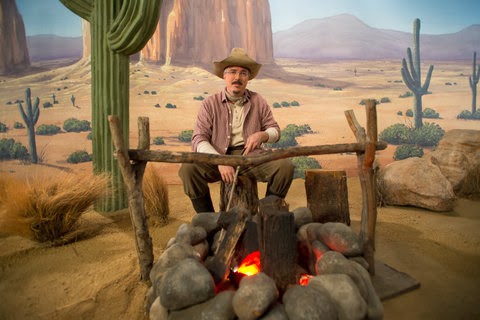
Unexpectedly, he opted for a cameo role in the NBC comedy “Community.” At the invitation of that show’s creator, Dan Harmon, Mr. Gilligan will make his professional on-camera acting debut in  Thursday’s episode, playing the host of a vintage VCR game with an Old West theme and some deeply confusing rules. (It spoils nothing to add that Mr. Gilligan’s character also appears, in a slightly different capacity, in a closing-credits scene with Gina
Gershon.)
Mr. Gilligan, who is now preparing the “Breaking Bad” spinoff “Better Call Saul” for a November debut, spoke recently about his visit to “Community.” In these edited excerpts from that conversation, he talks about what he’s learned from his introduction to acting.
Q.
Is this the beginning of your transition into acting?
A.
Yes. It’s a steppingstone to porn, which is actually my first true love. [Laughs] Everybody in their heart of hearts wishes they could be Errol Flynn or Harrison Ford, swashbuckling away in a big movie. I always knew I couldn’t act and I couldn’t sing, so I never really tried either. But out of the blue, Dan Harmon called up and said, would you like to do a guest shot on “Community”? And it was irresistible. I couldn’t say no.
 
Q.
How well did you know Dan when he asked you to do this?
A.
Not well. We had met at an Emmy party, probably two years before.  He’s a great storyteller and a fun guy to hang around with. But he’s busy, I was busy finishing up “Breaking Bad.” And that’s the way the business is. You have a great time talking to someone and then you don’t see them again for five years.
 
Q.
What was he like to work with on your “Community” scenes?
A.
As one would expect, “Community” being his brainchild, he’s a hilariously funny guy.  Exactly as I was on the set on of “Breaking Bad,” he looked pretty tired the day I saw him on “Community,” but he was a wonderful host.
 
Q.
Did this turn out to be a deceptively challenging assignment?
A.
I was so nervous because – not that it needs to be stressed for anyone who will watch the episode – I am no actor. I studied my lines. I tried to picture how Bryan Cranston or Aaron Paul would do it. But I got there and I said to Dan, “Are you sure about this? There’s a very good possibility I may be unwatchably terrible.” And he said, “We know that, too. [Laughs] The whole point of the character you’re playing is that he’s a bad actor. So the worse you are, perhaps the funnier it would be.”
 
Q.
You play the character with a deliberately silly Southern accent. Was this a skill you’ve always had, or one you developed specifically for the role?
A.
I swear to God, I did do my homework, however it comes across. I’d watch Gabby Hayes videos and I’d watch Walter Huston in “The Treasure of the Sierra Madre,” I’d be trying to imitate their voices. I’m not much of a mimic, unfortunately, but I had my upbringing in Virginia to fall back on. I used to have much more of a Southern accent than I do now — it seems to have gone away inadvertently after having lived here in Los Angeles for 20 years. I had to dig deep and pull it out from wherever it was hiding.
 
Q.
So there’s an element of self-mockery in the performance?
A.
[Laughs] Oh yeah. Even in the South, there’s different substrates of hillbillies and white trash.
 
Q.
Were you bummed that you didn’t get to share a scene with your former “Breaking Bad” co-star Jonathan Banks, who’s now on “Community”?
A.
He is such a sweetheart. He’s so crusty on the outside but he’s like a marshmallow on the inside. He knew how nervous I was and that I had never acted. And when he wrapped for the day, instead of driving home, which I’m sure he would have preferred to do, he hung around to run lines with me off camera. That made me more comfortable.
 
Q.
Did you learn anything from your acting experience that made you see your work as a producer or a director in a new light?
A.
I learned viscerally what I already knew intellectually. I know acting is a hard gig, but actually  having 30 or 40 union crew members standing around, staring at you — they’re professionals and they’re expecting you to  know your lines and not make them go home a half-hour or an hour or two hours later than they normally would. So you feel that pressure of getting it right in the first take.
 
Q.
Was it any more difficult in the scene you share with Gina Gershon?
A.
Gina Gershon’s an excellent actress, and man, just smoking hot. And just a very sweet, nice person. She very handily grasped the fact that I had not done this before. [Laughs] And I got to hug her over and over again, take after take, which was very enjoyable. I’m glad my girlfriend, Holly, was not there. That would have put a damper on things. [Laughs]
 
Q.
After this experience, are you thinking about how you might more substantially re-enter the world of scripted entertainment, or are you still kicking back and considering your options?
A.
I definitely am not giving up my job. We’re plugging away on “Better Call Saul,” I’m here in the writers’ offices as we speak, and we’re breaking our third episode out of our 10-episode first season. Peter Gould and I, we’re running it together, and we’re having a really good partnership.
 
Q.
So you were eager to re-immerse yourself in the world of “Breaking Bad”?
A.
Oh, yeah. I hadn’t written a “Breaking Bad” episode since the final episode about a year ago, and then we had to shoot it and edit it all, then there was the victory lap. It didn’t take long for me to start to miss the world of “Breaking Bad,” and I very much want “Better Call Saul” to get off on the best foot possible. I’ll be here every day, and directing the first episode and co-writing the first episode with Peter. I’ll be as helpful as I can at the beginning of Season 2, putting in a couple weeks full-time with Peter, and then gradually pulling back from it. Because Peter is more than ready to run his own show. And then I’ll look for a movie to do or create another TV show.

giovedì 22 novembre 2012

NEWS - Chevy Chase, quella è la porta! L'attore di "Community" lascia il set dopo l'ideatore
Articolo tratto da Deadline Hollywood
We may laugh at the on-camera antics of the Greendale Community College, but off-camera, the place is cursed. Cursed, I tell you! Chevy Chase, he of the angry phone call full of profanities and stubborn foot-dragging, is leaving Community and won't be returning, according to Deadline Hollywood. The decision was mutual, with both parties (Chase and Sony, the show's studio) agreeing that his departure was the best form of action.
No more Pierce Hawthorne. No more curmudgeonly racism. No more secret flasks inside of pens—Chase is leaving the show immediately. Luckily, most of Season 4 has already been filmed, meaning Pierce will only miss the last few episodes of the season.
I've always been more accepting of Pierce Hawthorne than most Community fans, so I'm bummed. I was also raised on Chevy Chase, growing up with movies like Fletch and Caddyshack. Heck, I even liked Funny Farm. However, I can't defend the allegations about his behavior behind the scenes, and if the show is better off with him leaving, that's the most important thing.

But can we all agree that even though Community is one of the most inventive comedies to hit television in the last decade, it's an utter mess, production-wise? Series creator Dan Harmon was fired at the end of last season, something that rarely happens in television. I'm sure the nuisance of Chase's disgruntled outbursts caused nothing but turmoil. The Community set must be one of the most bipolar places in Hollywood, if people are getting fired and arguing one minute and manifesting genius in episodes like "Remedial Chaos Theory" the next. What an absolute shame. And as much as it pains me to say this, there's no way NBC will renew Community for a fifth season or order more episodes beyond the 13 slated for Season 4. I just don't see it happening. I'M BUMMED, GUYS!
One more thing: How convenient that this news comes just as most people are in airport hell on their way to Thanksgiving dinner. Now, I'm not saying NBC and Sony TV are trying to bury it while Americans are busy spending time with their families, but okay yes that's exactly what I'm saying.

giovedì 31 maggio 2012

L'EDICOLA DI LOU - Stralci e commenti sui telefilm dai media italiani e stranieri

THE NEW YORKER
Imperdibile: l'omaggio di "Community" a "Doctor Who"

"The NBC series “Community” was created by Dan Harmon, a mad scientist of sitcoms—so divisive a figure that he was just run out of town by his own studio. (The show was re-upped for a fourth season, but Harmon was replaced with new showrunners.) Even amid the brutality of network TV production, this was a pretty shocking event, since “Community” is Dan Harmon, the way “Mad Men” is Matt Weiner. Set at a community college that is really a stage for wildly inventive genre experiments, it’s a comedy that’s at once alienating and warm, a sitcom lover’s sitcom that attracts the kind of fans that the media scholar Henry Jenkins once described, with admiration, as “frighteningly ‘out of control,’ undisciplined and unrepentant, rogue readers.”
In other words, not everyone. So perhaps it’s no coincidence that “Community” ’s excellent third season, which ended two weeks ago, featured a season-long meditation on the pains and pleasures of cult fanhood, structured around an homage to one of the greatest science-fiction shows: “Doctor Who.” The key to this exploration was the character of Abed Nadir, played by Danny Pudi with the gaze of an amused basilisk. Abed, who has Asperger’s syndrome and dreams of making documentaries, is in one sense a familiar sitcom character, the gentle alien observer—like Latka, in “Taxi.” But with each season he has drifted closer to the show’s center, replacing its ostensible hero, the smart-ass Jeff, and injecting “Community” with his super-fan enthusiasms, which range from Batman to “My Dinner with André.”
As Abed emerged, “Community” became a bit of a science-fiction show itself, the kind of series in which, in the season’s signature moment, a tossed die splits a dinner party into six alternate realities. In another plot this season, Abed and his best friend, Troy, constructed a Holodeck-like space in their apartment, which they called the Dreamatorium. Inside that green-and-yellow grid, Abed and Troy played out imaginary plots of their favorite show, “Inspector Spacetime,” which stars an “infinity knight” in a bowler hat, and his associate, Constable Reginald (Reggie) Wigglesworth.
“Inspector Spacetime” is, of course, an affectionate tribute to “Doctor Who,” the long-running series that helped create our modern breed of Abeds and Dan Harmons—the sort of difficult obsessives who make original things and then get fired. “Doctor Who” débuted on the BBC in 1963, three years before “Star Trek” (and the day after Kennedy was assassinated). The show’s eponymous hero was (and is) a Time Lord, capable of jumping through time and space. He does so in the whirling TARDIS, which looks like a bright-blue phone booth but is as large as a mansion once you step inside. When near death, he generates a new body, conveniently played by a new actor (something NBC surely wishes were a tradition for showrunners). There have also been many “companions,” often plucky females—most famously Sarah Jane Smith (Elisabeth Sladen)—as well as enemies, like those Nazi-ish pepper pots the Daleks. The show used the shabbiest possible effects, plus a fly-by-night attitude toward narrative logic, although its low budget was as much a feature as a bug: it made something out of nothing, much the way Abed and Troy constructed their Dreamatorium engine out of cardboard tubes and a funnel. After twenty-six years on the air—and intense devotion from fans—“Doctor Who” was cancelled, in 1989. Then, in 2005, it was “rebooted” by the BBC, and overseen, for the first four seasons, by Russell T. Davies, one of whose earliest memories, at the age of three, was of the 1966 season. In 2010, Steven Moffat, best known for his modern reinvention of “Sherlock,” took over, and Matt Smith became the eleventh Doctor.
Before I caught up on the last two seasons, my expectations were low. I anticipated something like the seventies-era series that I faintly remembered: a goofy, juvenile thrill ride. (I haven’t watched Davies’s version, but a fellow TV critic told me that she was so attached to his “Who” that she wasn’t watching Moffat’s.) The original “Who” dwelt on pure sci-fi obsessions, abstract questions of how society is organized and the line between humans and machines. But, as deeply as fans loved the show, its themes were rarely emotional. Instead, it jumped from Aztec civilization to Mars, as much an educational show for children as an adult narrative, with a British-colonialist view of the universe. (So many savages, so little time.) The series’ most striking feature was the Doctor himself: in contrast to “Star Trek” ’s Kirk—the Kennedyesque leader of a diverse society—the early Doctor Who was an alien iconoclast with two hearts and a universe-wide Eurail Pass. For a certain breed of viewer, this was an intoxicating ideal: the know-it-all whose streak of melancholy—or prickly rage, depending on who was Who—had to be honored, because he actually did know everything.
Though that show had its charms, I was surprised, and delighted, to find that the modern “Doctor Who” has a very different emphasis: it’s a show about relationships, in an epic and mythological vein. Certainly, the show has plenty of the classic “Doctor Who” pleasures, albeit with more sophisticated effects: there are seafaring pirates; a metallic England floating on a giant “Star Whale”; and a factory full of avatar-laborers whose faces melt off like goo. The Doctor himself is a pale, puppyish genius who shares several qualities with Moffat’s modernized Sherlock Holmes, including fashion affectations (he insists that bow ties are cool, then fezzes, then cowboy hats) and a Professor-from-“Gilligan’s Island” allure. The show’s strength, however, is not its one-off stories but its longer arcs, a structural breakthrough of “The X-Files,” which modelled the notion that episodic TV could be woven together with powerful, season-long themes, inspiring the more complex breed of modern shows, both sci-fi and regular-fi".
(Emily Nussbaum, 30.05.2012)

"Il trivial game + divertente dell'anno" (Lucca Comics)

"Il trivial game + divertente dell'anno" (Lucca Comics)
Il GIOCO DEI TELEFILM di Leopoldo Damerini e Fabrizio Margaria, nei migliori negozi di giocattoli: un viaggio lungo 750 domande divise per epoche e difficoltà. Sfida i tuoi amici/parenti/partner/amanti e diventa Telefilm Master. Disegni originali by Silver. Regolamento di Luca Borsa. E' un gioco Ghenos Games. http://www.facebook.com/GiocoDeiTelefilm. https://twitter.com/GiocoTelefilm

Lick it or Leave it!

Lick it or Leave it!