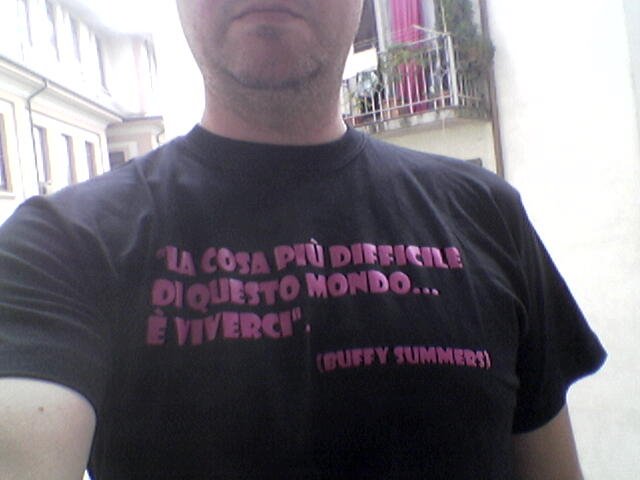
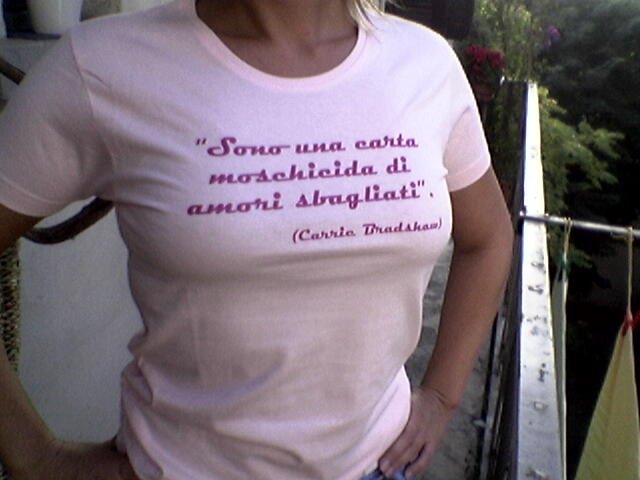
NEWS/L'EDICOLA DI LOU - Sadica, lesbica, femminista...: il mito di "Wonder Woman" rivisto e (s)corretto
Articolo tratto da Mic.com
It's hard out there for an Amazon warrior princess.
Wonder Woman has been a mainstay in
popular culture for close to seven decades. While today she's known as a
conventional hero (albeit a sexily costumed one), standing shoulder to
shoulder with the Caped Crusader and the Man of Steel, there's a tension
between the way she has come to be portrayed in popular culture and how
she was envisioned by her creator.
Originally conceived as a response to the
violence of popular comic heroes of the day, Wonder Woman reflected a
particular brand of feminism that was simultaneously forceful and sexy,
strong and desirable. She embodied dominant and submissive figures of
BDSM while representing a matriarchal system of power; her later
representations, however, stripped these sexual undercurrents
away entirely, making her more of a conventional hero (albeit a
sexily costumed one), fighting for truth and justice.
Created by the American writer and
psychologist
William Marston,
Wonder Woman made her first appearance in
late 1941, with DC Comics publishing the comics almost without
interruption ever since. Her connection to Greek mythology and current
world events (including World War II) made her tenets of love, peace and sexual all the more pressing, yet timeless. The debate over her onscreen representation, and the search to find
the right director, reflect the anxieties not only related to the
character, but in what she represents to us at this point in history,
when the word "
feminist" is dirty and the acts of bondage and submission, are, for some, debasing to women.
Marston envisioned her as a kind of revolutionary,
combining morality, sexuality, power and femininity, and creating a new
hierarchy based on dominant/submissive connection. Marston has a unique
history, as the inventor of
a blood pressure test that would later come to be major component in
polygraphs; whether this came into play through the depiction of Wonder
Woman using her "lasso of truth" is
the subject of much debate, but it's fair to say Marston was interested
in teasing out the ties between the physical and the emotional. Along
with his clinical work, Marston maintained a unique home life; he was married to feminist Elizabeth Holloway, but fell in love with Olive Byrne, the niece of noted birth
control campaigner Margaret Sanger; Byrne ultimately joined the Marston
household, and together the family raised four children.
The creation of
Wonder Woman came about as a
response to what was perceived as the unruly violence contained in
comics like Superman and Batman. The concern was that the brutality
contained within these works would be corrupting to its young readers.
As the
Economist wrote,
"
Wonder Woman was to be the magic bullet who, without bullets, would
silence comics' critics and, as Marston put it in 1945, act as
"psychological propaganda for the new type of woman who, I believe,
should rule the world."
Noah Berlatsky's
Wonder Woman: Bondage and Feminism examines Marston's creation, together with the illustrations of Harry Peter, from a scholarly point of view, incorporating elements of
third wave feminism and BDSM theory
to paint a portrait of a comic book figure well ahead of her time.
Rather than providing a so-called "magic bullet" that would allay
parental fears, Marston's creation explored power dynamics between the
sexes using playful, sometimes surreal images of bondage and submission
to celebrate what, in 1943, he called "women's strong qualities," ones that "have become despised because of their weakness."
Unlike journalist and Harvard historian Jill Lepore's The Secret History of Wonder Woman,
which explores the creation of the character as well as the lives and
lifestyles of its feminist creators, Berlatsky's work examines the roles
of bondage and lesbianism in the work, with the author intricately
detailing the meaning and overall power the comics still hold,
particularly for our day and age. As Berlatsky asked in a piece published by the Atlantic in October
2014, "How committed can a work of art be to feminist liberation when
women (and it is overwhelmingly women) are shown being tied up on every
page?"
It's the tension of dualities, between
liberated and bound, aggressive and submissive, of ultra-feminine and
ultra-masculine, and playing with those definitions, that powers much of
the original Wonder Woman and reflects the ethos of its polyamorous
creator. As Berlatsky points out in his book, these dualities, together
with Marston's pro-queer, pro-feminist, bondage-friendly ideology, have
been swept under the proverbial rug to present a more
mainstream-friendly figure who is still the stuff of comic book fantasy.
Berlatsky, the editor of Hooded Utilitarian, a
comics and culture site, has written a work filled with deep scholarly
insights on the history and politics of Wonder Woman's creator, as well
as a larger examination of the histories, lifestyles and personal ethos
that gave rise to one of popular culture's most powerful figures. Along
with sexual politics, it's worth examining how and why the lifestyle and
personal beliefs of Wonder Woman's creator are so central to
understanding her importance to contemporary feminism.
Mic: What inspired you to write a Wonder Woman book about the character's history and her creator?
Noah Berlatsky: I've been blogging about the original Marston-Peter comics for a few years. I found out about it through Dirk Deppey at Journalista, the Comics Journal
blog, which is sadly defunct. He posted a picture of Wonder Woman where
she had to bite through a mask while thinking about the history of
French bondage. I thought, "Oh my god, what is this?!" I started to find
more, then downloaded the original comics, then I was blogging through
all of the original Wonder Woman, all 28 issues, which were more
or less what Marston wrote. I thought this would be fun to write about
at greater length, and found out Rutgers was doing a comics series.
Mic: What makes the 1940s Wonder Woman comics so worthy of investigation?

NB: They're inspiring and weird and really
thoughtful about issues of gender and violence and sexuality, which are
things lots of people are interested in. I'm interested in them as well.
The comics are also distinctly great art, and they're timely in the way
interesting art is often always timely.
very pro-gay and Wonder Woman has
a connection
with queerness. Marston was kind of a feminist and queer theorist
himself, so he fits into those debates well, and I think he has an
unusual perspective on a lot of issues that are still important and
controversial, and that a lot of people are thinking about. As I talk
about in the book, I think he speaks to trans issues, which are timely, he speaks to issues around
sex-positive feminism, which is still very much an issue, and women and gender continue to be lenses through which people view the world.
They're feminist, and they're
Mic: Wonder Woman seems like a feminist
figure, but at the same time, the word "feminist" is still a dirty word
in some quarters. I'm curious where you think the figure of Wonder Woman
fits into that whole debate of "what is feminism?"
NB: There's various ways that works. Obviously,
feminism is a flash point, it's been discussed on the Internet and
elsewhere. It's not just that people don't identify with the word; the
Internet has made feminism more visible and more popular in some ways.
The Internet is a place where marginalized people can be attacked, but it's also a place where marginalized people can find each other. In terms of explicitly feminist heroes [...] there's Buffy, who, I think in many ways, it's not that she's perfect, but she was intended to be feminist, and
Wonder Woman herself is sometimes presented as feminist figure too.
But with Wonder Woman, it's tricky because in the
comic book industry, the creators are very male, the people who write
the drama of comics tend to be mostly men, and the readership, I think
is changing, but traditionally superhero comics readership has been very male and perceived as being quite male. The people who came right after her, like (comic book writer) Robert Kanigher,
were disinterested in that. (Kanigher) was the opposite of Marston; he
had no interest in feminism and wanted her to be a more domestic
traditional figure. The Wonder Woman animated movie a few years back was uncomfortable with feminism too, I would say.
Mic: We haven't seen Marston's Wonder Woman in popular culture, have we?
NB: People are into Wonder Woman as a figure of
empowerment, as a figure who fits with the more popular vision of
feminism, which is equal access, empowerment, that sort of thing.
Marston's Wonder Woman causes problems with that, because (his version)
is all about bondage and submission. Those are things that the people
who are comfortable with Wonder Woman's feminism aren't necessarily
super-comfortable with.
Mic: Why do you think there's that divide?
NB: I think when you're talking about female
empowerment, you don't want to talk about women being bound and
submitting; there's an obvious reason the people who want to talk about
women's freedom wouldn't see bondage
as a good thing. But there's another strand of feminism which looks at
femininity and saying the things associated with feminism, things like
submission or love, shouldn't be denigrated,
those things are important too.
I think Marston is coming from there, to some
extent. He was exploring this bondage switch, where the person on the
top should be on the bottom, and the person on the bottom should be on
the top, and it switches back and forth. He's promoting this one aspect
of femininity and feminism, which exists. But Wonder Woman, as a heroic
icon who saves people and beats up the bad guys, has been more congenial
to many of her fans — you even see it in the new movie, with her in the armor with the sword.
Mic: Friends of mine who have dressed as Wonder Woman for Halloween always got very strong, very positive reactions from men.
NB: Yeah, that's the other thing about Wonder
Woman: Marston wants Wonder Woman to be hot. When people say, "Wow she's
sexy," he thinks that's great, because sexuality is the way women
influence everybody to be submissive, not just men. But to some degree,
he's also a crank: He really loves to sign on to the idea that women are
essentially this and men are essentially that. I think (the Marston
comic) was very pro-sex and, not coincidentally, very pro-lesbian.
Mic: What were the problems you had with Jill Lepore's The Secret History of Wonder Woman? Is it fair to say you felt she left too much of this stuff out?
NB: To some extent it's good — if she'd written about the comics, then no one would need to read my book! (laughs) There are a couple issues,
though. First of all, she doesn't really see the comics as interesting
in themselves. She doesn't see the comics as being a worthwhile artistic
endeavor; she's not especially interested in them. She's interested in
Marston's biography and in his connection with
Margaret Sanger. She
thinks (Marston's life) is interesting because of that connection and
with early feminist communities. As far as the comics go, she doesn't
see them as interesting.
The other thing is that Marston isn't really
presented as a feminist or queer theorist, so ... there's an interest in
his polyamorous lifestyle, but not so much in what he has to say about
polyamory or sex. I think it takes away the excitement or the power of
having this person, of having Wonder Woman, be kind of a voice of
marginalized communities in some ways because it's not really what
(Lepore) is focused on. It becomes more of a curiosity than a kind of
actual part of what he's doing.
She doesn't talk much about how important
lesbianism is to the comics or Marston's theories, which I think has a
lot to do with his polyamorous relationship — that's where it's come
from, and going to. Obviously he's a guy, and there's some reasonable
mistrust or wondering about what it is he's doing, but at the same time
he's somebody who had a very close relationship with people who were
bisexual; his argument that lesbianism is normal and healthy and good
for everybody seems like an important part of what he's doing.
Mic: What do you think of the popularity of Wonder Woman as a cultural figure? She seems more popular than ever.
NB: I actually don't think she's more popular than
ever. The original comics were really, really popular, they sold
800,000 or a million copies per issue or something, which dwarfs now —
comics just don't sell like that anymore. She was a very popular
character, but the Wonder Woman comics have never been anywhere near as
popular again. There was the television show, which was very popular, and she was on the Justice League cartoons
— that's where most younger people know her from — but in terms of the
character being popular, it's not like Superman or Batman, where they've
been consistently popular.
Mic: In your book, you write about how Wonder Woman is angst-free. Why is that important?
NB: That's true, yes, it's great that
she's without angst. I
think people, like most popular heroes now ... people want angst. But
what I like about the new
Ms. Marvel comic
is that she doesn't become a hero because she has some sort of
traumatic horrible backstory; she becomes a hero because she wants to
help people, and that's where Wonder Woman is coming from in the
original. And ultimately that's where Marston was coming from: "This is
awesome, the heroism and caring and capturing and being-captured and
doing good — and turning the world into a matriarchy ... it's fun and
it's awesome, and everybody should enjoy it."

 Patty Jenkins is joining Netflix’s high-profile crowd of creators. The director of Wonder Woman and the upcoming Wonder Woman 1984 has signed a multi-year overall deal with Netflix to produce new TV series for the streaming service. It will be her latest foray into television after directing this year’s TNT limited series I Am The Night. Variety broke the news that Jenkins has signed a multi-year overall TV deal with Netflix that is valued at around $10 million over three years. Under the Patty Jenkins Netflix deal, the director-writer-producer will produce new TV series for the streaming service. “We’re thrilled to welcome Patty Jenkins to Netflix,” said Channing Dungey, vice president of original series at Netflix. “Her trailblazing work has pushed boundaries and she confidently tells stories that leave an unforgettable mark. We look forward to fostering her many ideas and helping them come to life,”. “I’m so excited to embark on a great journey of making the new world of television with a company and group of people I admire as much as Ted, Cindy, Channing, Peter and the team at Netflix,” Jenkins added. “I look forward to digging in to some great work together soon.”


.jpg)

.jpg)
.6.jpg)




 Post
Post


.jpg)


.JPG)
.jpg)
.JPG)
.JPG)


.JPG)
.JPG)


.jpg)