On the possibility of changing her body for a role: “I set a private goal to book an action movie. But what if I have to change my body so I look the way they want me to look? But with 'Glow', our producers didn’t want us to change our bodies at all. They said, ‘We want all shapes and sizes of women to be represented on this show. We love you the way you are.’”
Visualizzazione post con etichetta Community. Mostra tutti i post
mercoledì 17 gennaio 2018
GOSSIP - Alison Brie da "Glow" a..."Gotham"!
On the possibility of changing her body for a role: “I set a private goal to book an action movie. But what if I have to change my body so I look the way they want me to look? But with 'Glow', our producers didn’t want us to change our bodies at all. They said, ‘We want all shapes and sizes of women to be represented on this show. We love you the way you are.’”
Alison Brie is looking simply stunning on the cover of Gotham‘s January 2018 issue.
Here’s what the 34-year-old 'Glow' actress had to share…On the possibility of changing her body for a role: “I set a private goal to book an action movie. But what if I have to change my body so I look the way they want me to look? But with 'Glow', our producers didn’t want us to change our bodies at all. They said, ‘We want all shapes and sizes of women to be represented on this show. We love you the way you are.’”
Guarda la gallery completa:
giovedì 14 dicembre 2017
lunedì 11 dicembre 2017
domenica 15 marzo 2015
venerdì 6 giugno 2014
Alison Brie on @VanityFair! so #fashion! http://t.co/WK5tAcNsfZ #Community
— TelefilmCult (@TelefilmCult) 4 Giugno 2014
mercoledì 28 maggio 2014
NEWS - C'è poco da ridere! La prossima stagione sarà all'insegna del drama (meno sit-com per tutti)
Articolo di Brian Lowry per "Variety"
Desperate times call for desperate scheduling. And in the case of network comedy, that means breaking with longstanding traditions in seeking to invigorate a signature TV genre that is struggling mightily to find its place in the DVR age. The upcoming 2014-15 season was unveiled during last week’s network upfront presentations, coming on the heels of a year where much pre-season buzz surrounded a glut of high-profile comedies and big names — Michael J. Fox! Robin Williams! — gracing TV with their presence. Many critics glommed onto new shows with “Comedy’s back” abandon, enthusing over half-hours like “Enlisted,” “The Crazy Ones,” “Brooklyn Nine-Nine” and “About a Boy.”
While the last two will be back, the pile-up of canceled comedies resembled the carnage in a summer blockbuster. NBC finally got around to pulling the plug on “Community,” and announced a closing run of “Parks and Recreation,” shows whose media footprint always far surpassed their Nielsen resumes.
The real jaw-dropping takeaway from the aggregated lineups, however, is how decades of tradition were discarded, largely because the challenge in launching new comedies has become so formidable.
Toward that end, NBC will shift a drama, “The Blacklist,” to anchor its Thursday lineup at midseason, and kick off the fall with reality competition “The Biggest Loser” in the 8 p.m. hour — the first time the Peacock will be comedy-free to open the night in more than three decades. (NBC did move “The Apprentice” into its 9 p.m. slot during Jeff Zucker’s tenure, generally seen as a Hail Mary pass after years of squandered sitcom development.)
Fox, meanwhile, will break up its longtime Animation Domination block, pairing “The Simpsons” and “Family Guy” on Sunday with two live-action sitcoms, “Brooklyn Nine-Nine” and the new “Mulaney,” respectively.
CBS felt compelled to shrink its comedy footprint by an hour, and thanks to its acquisition of Thursday-night football, will get through a chunk of the fall airing only two sitcoms.
During his network’s upfront, ABC entertainment chief Paul Lee described passion as a must-have ingredient for program survival in the modern age, saying of successful shows, “It’s about what you love — what you seek out.”
Sitcoms have still managed to form love connections. But with a few ostentatious exceptions — CBS’ “The Big Bang Theory” and to a lesser degree ABC’s “Modern Family” — those bonds have been with smaller audiences, to whom such shows can speak in a more particular way. Other than those Emmy-nominated network hits, the roster of cable award contenders, like “Girls,” “Veep” and “Louie,” draw crowds that would get them canceled between the first and second commercial breaks by any broadcaster.
Echoing Lee, Fox counterpart Kevin Reilly discussed the need for new shows to make noise in order to get noticed. But comedies generally struggle to conjure the kind of noise-making concepts that dramas or reality shows can, which is why new sitcoms have traditionally relied on an existing hit to help lead people into the tent. “Strong lead-ins still matter,” CBS entertainment president Nina Tassler says.
In success, of course, there’s still nothing quite so lucrative as a wildly popular comedy — and even in this day and age, “Big Bang” is a supernova of profits for Warner Bros. Television.
Amid the din of channels crying for attention, however, the sound emanating from such hits, along with the experience of widely shared laughter, looks to be slowly but steadily fading. And if that trend can’t be reversed, sitcoms as a genre could really be the biggest loser.
Articolo di Brian Lowry per "Variety"
Desperate times call for desperate scheduling. And in the case of network comedy, that means breaking with longstanding traditions in seeking to invigorate a signature TV genre that is struggling mightily to find its place in the DVR age. The upcoming 2014-15 season was unveiled during last week’s network upfront presentations, coming on the heels of a year where much pre-season buzz surrounded a glut of high-profile comedies and big names — Michael J. Fox! Robin Williams! — gracing TV with their presence. Many critics glommed onto new shows with “Comedy’s back” abandon, enthusing over half-hours like “Enlisted,” “The Crazy Ones,” “Brooklyn Nine-Nine” and “About a Boy.”
While the last two will be back, the pile-up of canceled comedies resembled the carnage in a summer blockbuster. NBC finally got around to pulling the plug on “Community,” and announced a closing run of “Parks and Recreation,” shows whose media footprint always far surpassed their Nielsen resumes.
The real jaw-dropping takeaway from the aggregated lineups, however, is how decades of tradition were discarded, largely because the challenge in launching new comedies has become so formidable.
Toward that end, NBC will shift a drama, “The Blacklist,” to anchor its Thursday lineup at midseason, and kick off the fall with reality competition “The Biggest Loser” in the 8 p.m. hour — the first time the Peacock will be comedy-free to open the night in more than three decades. (NBC did move “The Apprentice” into its 9 p.m. slot during Jeff Zucker’s tenure, generally seen as a Hail Mary pass after years of squandered sitcom development.)
Fox, meanwhile, will break up its longtime Animation Domination block, pairing “The Simpsons” and “Family Guy” on Sunday with two live-action sitcoms, “Brooklyn Nine-Nine” and the new “Mulaney,” respectively.
CBS felt compelled to shrink its comedy footprint by an hour, and thanks to its acquisition of Thursday-night football, will get through a chunk of the fall airing only two sitcoms.
During his network’s upfront, ABC entertainment chief Paul Lee described passion as a must-have ingredient for program survival in the modern age, saying of successful shows, “It’s about what you love — what you seek out.”
Sitcoms have still managed to form love connections. But with a few ostentatious exceptions — CBS’ “The Big Bang Theory” and to a lesser degree ABC’s “Modern Family” — those bonds have been with smaller audiences, to whom such shows can speak in a more particular way. Other than those Emmy-nominated network hits, the roster of cable award contenders, like “Girls,” “Veep” and “Louie,” draw crowds that would get them canceled between the first and second commercial breaks by any broadcaster.
Echoing Lee, Fox counterpart Kevin Reilly discussed the need for new shows to make noise in order to get noticed. But comedies generally struggle to conjure the kind of noise-making concepts that dramas or reality shows can, which is why new sitcoms have traditionally relied on an existing hit to help lead people into the tent. “Strong lead-ins still matter,” CBS entertainment president Nina Tassler says.
In success, of course, there’s still nothing quite so lucrative as a wildly popular comedy — and even in this day and age, “Big Bang” is a supernova of profits for Warner Bros. Television.
Amid the din of channels crying for attention, however, the sound emanating from such hits, along with the experience of widely shared laughter, looks to be slowly but steadily fading. And if that trend can’t be reversed, sitcoms as a genre could really be the biggest loser.
Etichette:
Brian Lowry,
Brooklyn Nine-Nine,
Community,
Enlisted,
Girls,
L'EDICOLA DI LOU,
Louie,
Modern Family,
NEWS,
Parks and Recreation,
The Big Bang Theory,
The Blacklist,
The Crazy Ones,
Veep
domenica 16 marzo 2014
L'EDICOLA DI LOU - Stralci, cover e commenti sui telefilm dai media italiani e stranieri
NEW YORK TIMES
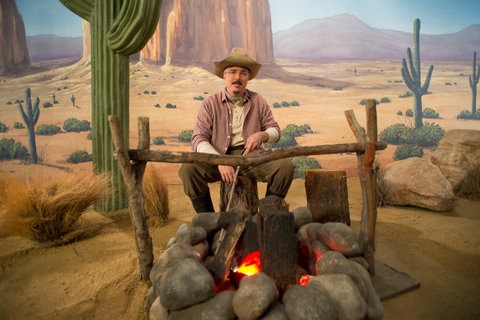
Vince Gilligan, dopo aver ideato "Breaking Bad", si concede cameo in "Community"
NEW YORK TIMES
Vince Gilligan, dopo aver ideato "Breaking Bad", si concede cameo in "Community"
After bringing his AMC series “Breaking Bad” to its highly praised conclusion and earning an Emmy Award for outstanding drama, creator Vince Gilligan probably could have done anything he wanted for his next act.
Unexpectedly, he opted for a cameo role in the NBC comedy “Community.” At the invitation of that show’s creator, Dan Harmon, Mr. Gilligan will make his professional on-camera acting debut in Thursday’s episode, playing the host of a vintage VCR game
with an Old West theme and some deeply confusing rules. (It spoils
nothing to add that Mr. Gilligan’s character also appears, in a slightly
different capacity, in a closing-credits scene with Gina
Gershon.)
Mr. Gilligan, who is now preparing the “Breaking Bad” spinoff “Better Call Saul”
for a November debut, spoke recently about his visit to “Community.” In
these edited excerpts from that conversation, he talks about what he’s
learned from his introduction to acting.
Q.
Is this the beginning of your transition into acting?
A.
Yes. It’s a steppingstone to porn, which is
actually my first true love. [Laughs] Everybody in their heart of hearts
wishes they could be Errol Flynn or Harrison Ford, swashbuckling away
in a big movie. I always knew I couldn’t act and I couldn’t sing, so I
never really tried either. But out of the blue, Dan Harmon called up and
said, would you like to do a guest shot on “Community”? And it was
irresistible. I couldn’t say no.
Q.
How well did you know Dan when he asked you to do this?
A.
Not well. We had met at an Emmy party,
probably two years before. He’s a great storyteller and a fun guy to
hang around with. But he’s busy, I was busy finishing up “Breaking Bad.”
And that’s the way the business is. You have a great time talking to
someone and then you don’t see them again for five years.
Q.
What was he like to work with on your “Community” scenes?
A.
As one would expect, “Community” being his
brainchild, he’s a hilariously funny guy. Exactly as I was on the set
on of “Breaking Bad,” he looked pretty tired the day I saw him on
“Community,” but he was a wonderful host.
Q.
Did this turn out to be a deceptively challenging assignment?
A.
I was so nervous because – not that it needs
to be stressed for anyone who will watch the episode – I am no actor. I
studied my lines. I tried to picture how Bryan Cranston or Aaron Paul
would do it. But I got there and I said to Dan, “Are you sure about
this? There’s a very good possibility I may be unwatchably terrible.”
And he said, “We know that, too. [Laughs] The whole point of the
character you’re playing is that he’s a bad actor. So the worse you are,
perhaps the funnier it would be.”
Q.
You play the character with a deliberately
silly Southern accent. Was this a skill you’ve always had, or one you
developed specifically for the role?
A.
I swear to God, I did do my homework, however it comes across. I’d watch Gabby Hayes videos and I’d watch Walter Huston in “The Treasure of the Sierra Madre,”
I’d be trying to imitate their voices. I’m not much of a mimic,
unfortunately, but I had my upbringing in Virginia to fall back on. I
used to have much more of a Southern accent than I do now — it seems to
have gone away inadvertently after having lived here in Los Angeles for
20 years. I had to dig deep and pull it out from wherever it was hiding.
Q.
So there’s an element of self-mockery in the performance?
A.
[Laughs] Oh yeah. Even in the South, there’s different substrates of hillbillies and white trash.
Q.
Were you bummed that you didn’t get to share a scene with your former “Breaking Bad” co-star Jonathan Banks, who’s now on “Community”?
A.
He is such a sweetheart. He’s so crusty on
the outside but he’s like a marshmallow on the inside. He knew how
nervous I was and that I had never acted. And when he wrapped for the
day, instead of driving home, which I’m sure he would have preferred to
do, he hung around to run lines with me off camera. That made me more
comfortable.
Q.
Did you learn anything from your acting experience that made you see your work as a producer or a director in a new light?
A.
I learned viscerally what I already knew
intellectually. I know acting is a hard gig, but actually having 30 or
40 union crew members standing around, staring at you — they’re
professionals and they’re expecting you to know your lines and not make
them go home a half-hour or an hour or two hours later than they
normally would. So you feel that pressure of getting it right in the
first take.
Q.
Was it any more difficult in the scene you share with Gina Gershon?
A.
Gina Gershon’s an excellent actress, and man,
just smoking hot. And just a very sweet, nice person. She very handily
grasped the fact that I had not done this before. [Laughs] And I got to
hug her over and over again, take after take, which was very enjoyable.
I’m glad my girlfriend, Holly, was not there. That would have put a
damper on things. [Laughs]
Q.
After this experience, are you thinking about
how you might more substantially re-enter the world of scripted
entertainment, or are you still kicking back and considering your
options?
A.
I definitely am not giving up my job. We’re plugging away on “Better Call Saul,”
I’m here in the writers’ offices as we speak, and we’re breaking our
third episode out of our 10-episode first season. Peter Gould and I,
we’re running it together, and we’re having a really good partnership.
Q.
So you were eager to re-immerse yourself in the world of “Breaking Bad”?
A.
Oh, yeah. I hadn’t written a “Breaking Bad”
episode since the final episode about a year ago, and then we had to
shoot it and edit it all, then there was the victory lap. It didn’t take
long for me to start to miss the world of “Breaking Bad,” and I very
much want “Better Call Saul” to get off on the best foot possible. I’ll
be here every day, and directing the first episode and co-writing the
first episode with Peter. I’ll be as helpful as I can at the beginning
of Season 2, putting in a couple weeks full-time with Peter, and then
gradually pulling back from it. Because Peter is more than ready to run
his own show. And then I’ll look for a movie to do or create another TV
show.
sabato 11 maggio 2013
NEWS - Compilation! Tutte le serie cancellate e rinnovate fino ad oggi!
Tutte le #serietv cancellate e confermate fino ad oggi tvline.com/2013/01/04/tv-… #telefilm
— AccademiaTelefilm (@AcademyTelefilm) 11 maggio 2013
Etichette:
Bones,
Community,
CSI: NY,
Go On,
Golden Boy,
Grimm,
NEWS,
Person of interest,
Revenge,
Rules of Engagement,
Scandal,
Smash,
Suburgatory,
The New Normal,
Touch
giovedì 22 novembre 2012
NEWS - Chevy Chase, quella è la porta! L'attore di "Community" lascia il set dopo l'ideatore
Articolo tratto da Deadline Hollywood
We may laugh at the on-camera antics of the Greendale Community College, but off-camera, the place is cursed. Cursed, I tell you! Chevy Chase, he of the angry phone call full of profanities and stubborn foot-dragging, is leaving Community and won't be returning, according to Deadline Hollywood. The decision was mutual, with both parties (Chase and Sony, the show's studio) agreeing that his departure was the best form of action.
No more Pierce Hawthorne. No more curmudgeonly racism. No more secret flasks inside of pens—Chase is leaving the show immediately. Luckily, most of Season 4 has already been filmed, meaning Pierce will only miss the last few episodes of the season.
I've always been more accepting of Pierce Hawthorne than most Community fans, so I'm bummed. I was also raised on Chevy Chase, growing up with movies like Fletch and Caddyshack. Heck, I even liked Funny Farm. However, I can't defend the allegations about his behavior behind the scenes, and if the show is better off with him leaving, that's the most important thing.
But can we all agree that even though Community is one of the most inventive comedies to hit television in the last decade, it's an utter mess, production-wise? Series creator Dan Harmon was fired at the end of last season, something that rarely happens in television. I'm sure the nuisance of Chase's disgruntled outbursts caused nothing but turmoil. The Community set must be one of the most bipolar places in Hollywood, if people are getting fired and arguing one minute and manifesting genius in episodes like "Remedial Chaos Theory" the next. What an absolute shame. And as much as it pains me to say this, there's no way NBC will renew Community for a fifth season or order more episodes beyond the 13 slated for Season 4. I just don't see it happening. I'M BUMMED, GUYS!
One more thing: How convenient that this news comes just as most people are in airport hell on their way to Thanksgiving dinner. Now, I'm not saying NBC and Sony TV are trying to bury it while Americans are busy spending time with their families, but okay yes that's exactly what I'm saying.
Articolo tratto da Deadline Hollywood
We may laugh at the on-camera antics of the Greendale Community College, but off-camera, the place is cursed. Cursed, I tell you! Chevy Chase, he of the angry phone call full of profanities and stubborn foot-dragging, is leaving Community and won't be returning, according to Deadline Hollywood. The decision was mutual, with both parties (Chase and Sony, the show's studio) agreeing that his departure was the best form of action.
No more Pierce Hawthorne. No more curmudgeonly racism. No more secret flasks inside of pens—Chase is leaving the show immediately. Luckily, most of Season 4 has already been filmed, meaning Pierce will only miss the last few episodes of the season.
I've always been more accepting of Pierce Hawthorne than most Community fans, so I'm bummed. I was also raised on Chevy Chase, growing up with movies like Fletch and Caddyshack. Heck, I even liked Funny Farm. However, I can't defend the allegations about his behavior behind the scenes, and if the show is better off with him leaving, that's the most important thing.
But can we all agree that even though Community is one of the most inventive comedies to hit television in the last decade, it's an utter mess, production-wise? Series creator Dan Harmon was fired at the end of last season, something that rarely happens in television. I'm sure the nuisance of Chase's disgruntled outbursts caused nothing but turmoil. The Community set must be one of the most bipolar places in Hollywood, if people are getting fired and arguing one minute and manifesting genius in episodes like "Remedial Chaos Theory" the next. What an absolute shame. And as much as it pains me to say this, there's no way NBC will renew Community for a fifth season or order more episodes beyond the 13 slated for Season 4. I just don't see it happening. I'M BUMMED, GUYS!
One more thing: How convenient that this news comes just as most people are in airport hell on their way to Thanksgiving dinner. Now, I'm not saying NBC and Sony TV are trying to bury it while Americans are busy spending time with their families, but okay yes that's exactly what I'm saying.
lunedì 8 ottobre 2012
L'EDICOLA DI LOU - Stralci e commenti sui telefilm dai media italiani e stranieri
RIVISTA STUDIO
Ecco perchè "Louie" cambierà la tv
"Louie è una serie americana che va in onda su FX, scritta, diretta e interpretata da quello che è considerato il miglior stand up comedian vivente, Louis C.K. La scorsa settimana si è conclusa la terza acclamatissima stagione dello show, ed è quindi giunto il momento di fermarsi e parlarne un po’. Partiamo da un argomento – argomento che svelerà tutta la mia bias sulla questione, ma comunque -: Louie è un capolavoro. C’è chi lo ha visto ed è rimastosenza parole se non di stupore ed elogio; c’è chi si è spinto oltre, come Todd VanDerWerff su A.V. Club, che considera la portata della serie paragonabile – in termine di qualità e influenza artistica – a quella che i Sopranos hanno avuto nel nuovo millennio. Un articolo, quest’ultimo, che per quanto sostenga una tesi scottante e blasfema per un pubblico affezionato a Tony & Co., squarcia il velo di Maya su una separazione che sta perdendo sempre più senso, quella tra drama e comedy.
RIVISTA STUDIO
Ecco perchè "Louie" cambierà la tv
"Louie è una serie americana che va in onda su FX, scritta, diretta e interpretata da quello che è considerato il miglior stand up comedian vivente, Louis C.K. La scorsa settimana si è conclusa la terza acclamatissima stagione dello show, ed è quindi giunto il momento di fermarsi e parlarne un po’. Partiamo da un argomento – argomento che svelerà tutta la mia bias sulla questione, ma comunque -: Louie è un capolavoro. C’è chi lo ha visto ed è rimastosenza parole se non di stupore ed elogio; c’è chi si è spinto oltre, come Todd VanDerWerff su A.V. Club, che considera la portata della serie paragonabile – in termine di qualità e influenza artistica – a quella che i Sopranos hanno avuto nel nuovo millennio. Un articolo, quest’ultimo, che per quanto sostenga una tesi scottante e blasfema per un pubblico affezionato a Tony & Co., squarcia il velo di Maya su una separazione che sta perdendo sempre più senso, quella tra drama e comedy.
Drama e comedy sono i due mostruosi buchi neri a cui Hollywood e la televisione girano attorno: sono due macrogeneri complessissimi, zeppi di galassie e ulteriori buchi neri, che hanno la stessa funzione di Mosé sul Mar Rosso: separare acque e mettere ordine. Così, tutti i prodotti vengono sistemati su due grandi scaffali – drama e comedy – in modo che lo spettatore possa scegliere da quale pescare, chiedendosi se abbia voglia di ridere o di “cose serie”. Negli ultimi anni però si è assistito alla sofisticazione del reparto drama: prima la Hbo con show come The Wire, Deadwood e i citati Sopranos; e poi, a cascata, altri network come Amc (Mad Men, Breaking Bad), hanno allestito un separè tra i prodotti complessi, d’enorme qualità, dalla scrittura incredibile e lo storytelling funambolico, e altri show in cui a trionfare è la complessità della trama e la suspense – come le incredibili cose firmate J.J. Abrams (Lost, Fringe) e 24.
Mentre la primavera sbocciava nella drama, il settore comedy viveva ancora la pace dei sensi data dal Grande Muro Dei Due Generi, e al massimo ci si arrovellava con le solite distinzioni tra comicità “alta” e “bassa”. Se da una parte il The Office inglese e successi come Curb Your Enthusiasm hanno alzato l’asticella qualitativa di parecchie tacche, dall’altra è mancato un prodotto shock in grado di far tremare le fondamenta dell’incerto duopolio drama-comedy, rivelandone l’inadeguatezza. Per tutti questi anni non sono mancati spettacoli di qualità: anzi, gioielli come East Bound and Down, Parks and Recreation, Community (specie la terza incredibile stagione) hanno reso gli ultimi anni indimenticabili. È mancato però all’appello il momento-Gesù Cristo, in grado di fissare un prima e un dopo. Forse per la natura insita della comicità – che è fatta di rimandi, modelli, parodie e richiami spesso criptici ad altri autori e opere (per ulteriori informazioni citofonare Luttazzi) – le sit com hanno sempre seguito sentieri preesistenti. L’unica eccezione, Seinfeld, risale a decenni fa ed è a sua volta diventato modello, format.
Ma vediamo alcuni di questi filoni comici: tra i più comuni nella scrittura comica “alta”, c’è quello del mockumentary, in cui i protagonisti sanno di essere ripresi da una troupe e parlano in camera (The Office e praticamente tutto Ricky Gervais,Curb Your Enthusiasm, Parks and Rec); il modello post-Seinfeld in cui la sit com tradizionale è rivista con humour più sofisticato; e un altro filone seinfeldiano: quello che racconta in prima persona la vita di un comico. E qui si parla in realtà di un’intersezione di format, che tocca Seinfeld, per l’appunto, Curb Your Enthusiasme arriva a Louie.
Louie è infatti la storia di un comico, Louis C.K., divorziato con due bambine. Proprio come in Seinfeld, i suoi episodi vengono intervallati da spezzoni di stand up che spesso seguono il tema portante della puntata. (Da notare che la vita da comico di strada e i relativi spezzoni live si sono diradati col procedere della storia, per scomparire nella terza stagione dopo l’episodio “Miami”). Si potrebbe quindi concludere che anche lo show di C.K., per quanto atipico, sia ascrivibile alla tradizione iniziata dal capolavoro di Jerry Seinfeld e Larry David. Però non è così semplice: Louie è un affare dalla forma troppo strana, inedita, per calzare a pennello nello scatolone della comedy e lì riposare per sempre. Per esempio, se mi domandaste (è un’opinione personale ma penso piuttosto diffusa) perché guardo e amo la serie di C.K., non me la sentirei di rispondere: “Perché fa ridere”. Louie non fa ridere. E non è nemmeno una sit com. Della sit com ha solo la durata delle puntata (circa 20 minuti). Nient’altro. E non perché gioca a fare l’anti-sit com: no, sarebbe troppo facile, già fatto (anche dallo stesso Louis C.K., con Lucky Louie). La spiegazione è più profonda e porta il prodotto a galleggiare nel vuoto che dovrebbe esserci al di fuori degli universi drama e comedy (vuoto che ovviamente non è tale e aspetta solo di essere esplorato). Alcuni momenti della serie sono tragici, profondi e in molti casi toccano le corde del drama con una classe che non ha molto da invidiare a un gioiello come Mad Men. E ciò nonostante, riesce a mantenersi irreale: nella finzione, per esempio, il protagonista ha un fratello nella prima stagione che scompare nella seconda per far posto a un paio di sorelle che durano appena una scena per poi sparire per sempre; ha anche una madre, che è stata portata in scena da due attrici diverse (una di queste aveva coperto anche il ruolo di un suo flirtqualche puntata prima, senza per questo costringerci a tirare fuori tutto Freud). Irreale e folle. E, allo stesso tempo, reale (e se a questo punto state dicendo: “D’accordo, però deciditi!”, è proprio questo il punto: non lo si può fare). Reale perché i macrotemi sono quelli dei grandi classici e della vita di tutti i giorni – l’amore, l’amicizia, l’ambizione, il lavoro ecc. E perché a parlare sono sempre esseri umani piuttosto credibili, solo inzuppati in un contesto ironico, tra il nonsense, la risata verde, il grottesco e la pura follia inquietante.
Anche gli strumenti comici sono quelli tradizionali, anche se declinati in modo nuovo. Dal vecchio baule del comico, C.K. tira fuori il sesso, l’ironia della vita di tutti i giorni, il corpo esposto, la merda e la piscia (in una puntata recente si vede un bambino che mangia carne cruda, si fa un bagno e ha un attacco di diarrea nella vasca). E poi c’è la prima persona singolare che riempie ogni fotogramma dello spettacolo: non c’è una scena in cui non compaia l’attore – gira tutto attorno a lui, come se la troupe di The Office si fosse fatta minuscola, invisibile e bastardissima – e non manca un bel po’ d’egocentrismo, specie nelle scene familiari (quando è con le sue bambine, le due molle che tengono in costante movimento quest’omone in sovrappeso) o para-sessuali (momenti, questi, in cui si scivola talvolta nell’autocommiserazione gratuita). Mancano completamente i grandi classici della sit com: il giro d’amici fisso, la casa come scena principale, il vicino di casa un po’ pazzerello che entra ed esce a suo piacimento (Cosmo Cramer di Seinfeld, che tra gli altri aveva già ispirato il personaggio di Uncle Jerry in Lucky Louie). C’è solo lui, Louis C.K – o una sua versione più o meno autobiografica. Il resto del mondo è fatto di satelliti orbitanti, presenze vaghe e lontane, figlie da dividere con un’ex moglie inspiegabilmente afroamericana, vicini di casa che fumano bong meccanici. Il protagonista è un uomo solo e triste, la cui vita privata è a pezzi e quella professionale arranca tra indecisioni, grandi occasioni e David Lynch. Il cui rapporto con le donne e il padre nasconde un pozzo senza fondo di paure, odio e amore. Parliamo di un uomo senza un perché, profondamente triste nonostante il suo lavoro sia far ridere, la cui unica ragione di vita è essere per le sue bambine un padre migliore di quello che ha avuto.
Al di là del grande successo di critica e i buoni risultati di pubblico, la serie di C.K. potrebbe finire per costruire il primo tunnel a collegare i due colossi dell’intrattenimento, drama e comedy, chimere con cui continuiamo e ripeterci che la vita sia amara oppure divertente, e non un miscuglio continuo, frenetico e inquietante delle due cose – e molto altro. Louie è lo show più triste, maturo e serio del mondo. Per questo fa così ridere".
(Pietro Minto, 05.10.2012)
Etichette:
24,
Breaking Bad,
Community,
David Lynch,
Deadwood,
Fringe,
I Soprano,
J.J. Abrams,
L'EDICOLA DI LOU,
Lost,
Louie,
Louis CK,
Mad Men,
Parks and Recreation,
Seinfeld,
The Wire
giovedì 31 maggio 2012
L'EDICOLA DI LOU - Stralci e commenti sui telefilm dai media italiani e stranieriTHE NEW YORKER
Imperdibile: l'omaggio di "Community" a "Doctor Who"
"The NBC series “Community” was created by Dan Harmon, a mad scientist of sitcoms—so divisive a figure that he was just run out of town by his own studio. (The show was re-upped for a fourth season, but Harmon was replaced with new showrunners.) Even amid the brutality of network TV production, this was a pretty shocking event, since “Community” is Dan Harmon, the way “Mad Men” is Matt Weiner. Set at a community college that is really a stage for wildly inventive genre experiments, it’s a comedy that’s at once alienating and warm, a sitcom lover’s sitcom that attracts the kind of fans that the media scholar Henry Jenkins once described, with admiration, as “frighteningly ‘out of control,’ undisciplined and unrepentant, rogue readers.”
In other words, not everyone. So perhaps it’s no coincidence that “Community” ’s excellent third season, which ended two weeks ago, featured a season-long meditation on the pains and pleasures of cult fanhood, structured around an homage to one of the greatest science-fiction shows: “Doctor Who.” The key to this exploration was the character of Abed Nadir, played by Danny Pudi with the gaze of an amused basilisk. Abed, who has Asperger’s syndrome and dreams of making documentaries, is in one sense a familiar sitcom character, the gentle alien observer—like Latka, in “Taxi.” But with each season he has drifted closer to the show’s center, replacing its ostensible hero, the smart-ass Jeff, and injecting “Community” with his super-fan enthusiasms, which range from Batman to “My Dinner with André.”
As Abed emerged, “Community” became a bit of a science-fiction show itself, the kind of series in which, in the season’s signature moment, a tossed die splits a dinner party into six alternate realities. In another plot this season, Abed and his best friend, Troy, constructed a Holodeck-like space in their apartment, which they called the Dreamatorium. Inside that green-and-yellow grid, Abed and Troy played out imaginary plots of their favorite show, “Inspector Spacetime,” which stars an “infinity knight” in a bowler hat, and his associate, Constable Reginald (Reggie) Wigglesworth.
“Inspector Spacetime” is, of course, an affectionate tribute to “Doctor Who,” the long-running series that helped create our modern breed of Abeds and Dan Harmons—the sort of difficult obsessives who make original things and then get fired. “Doctor Who” débuted on the BBC in 1963, three years before “Star Trek” (and the day after Kennedy was assassinated). The show’s eponymous hero was (and is) a Time Lord, capable of jumping through time and space. He does so in the whirling TARDIS, which looks like a bright-blue phone booth but is as large as a mansion once you step inside. When near death, he generates a new body, conveniently played by a new actor (something NBC surely wishes were a tradition for showrunners). There have also been many “companions,” often plucky females—most famously Sarah Jane Smith (Elisabeth Sladen)—as well as enemies, like those Nazi-ish pepper pots the Daleks. The show used the shabbiest possible effects, plus a fly-by-night attitude toward narrative logic, although its low budget was as much a feature as a bug: it made something out of nothing, much the way Abed and Troy constructed their Dreamatorium engine out of cardboard tubes and a funnel. After twenty-six years on the air—and intense devotion from fans—“Doctor Who” was cancelled, in 1989. Then, in 2005, it was “rebooted” by the BBC, and overseen, for the first four seasons, by Russell T. Davies, one of whose earliest memories, at the age of three, was of the 1966 season. In 2010, Steven Moffat, best known for his modern reinvention of “Sherlock,” took over, and Matt Smith became the eleventh Doctor.
Before I caught up on the last two seasons, my expectations were low. I anticipated something like the seventies-era series that I faintly remembered: a goofy, juvenile thrill ride. (I haven’t watched Davies’s version, but a fellow TV critic told me that she was so attached to his “Who” that she wasn’t watching Moffat’s.) The original “Who” dwelt on pure sci-fi obsessions, abstract questions of how society is organized and the line between humans and machines. But, as deeply as fans loved the show, its themes were rarely emotional. Instead, it jumped from Aztec civilization to Mars, as much an educational show for children as an adult narrative, with a British-colonialist view of the universe. (So many savages, so little time.) The series’ most striking feature was the Doctor himself: in contrast to “Star Trek” ’s Kirk—the Kennedyesque leader of a diverse society—the early Doctor Who was an alien iconoclast with two hearts and a universe-wide Eurail Pass. For a certain breed of viewer, this was an intoxicating ideal: the know-it-all whose streak of melancholy—or prickly rage, depending on who was Who—had to be honored, because he actually did know everything.
Though that show had its charms, I was surprised, and delighted, to find that the modern “Doctor Who” has a very different emphasis: it’s a show about relationships, in an epic and mythological vein. Certainly, the show has plenty of the classic “Doctor Who” pleasures, albeit with more sophisticated effects: there are seafaring pirates; a metallic England floating on a giant “Star Whale”; and a factory full of avatar-laborers whose faces melt off like goo. The Doctor himself is a pale, puppyish genius who shares several qualities with Moffat’s modernized Sherlock Holmes, including fashion affectations (he insists that bow ties are cool, then fezzes, then cowboy hats) and a Professor-from-“Gilligan’s Island” allure. The show’s strength, however, is not its one-off stories but its longer arcs, a structural breakthrough of “The X-Files,” which modelled the notion that episodic TV could be woven together with powerful, season-long themes, inspiring the more complex breed of modern shows, both sci-fi and regular-fi".
(Emily Nussbaum, 30.05.2012)
giovedì 7 gennaio 2010
LA VITA E' UNA COSA SERIAL - “Modern Family” guida la rivincita delle sit-comRidete, ridete, le sit-com son tornate. Nel peggior autunno televisivo a “stelle e strisce” degli ultimi decenni, in quanto a idee e fantasia, il genere comedy sembra godersi la sua vendetta dopo stagioni di appannaggio. Il caso emblematico s’intitola “Modern Family” ed è già assurta al titolo di “serie dell’anno” (non solo tra le situation-comedy). Sorta di spugna che assorbe da “Tutti amano Raymond”, “Arrested Development” e, molto in flashback, da “Arcibaldo”, vede un patriarca di una famiglia allargata e molto liberal sposato con una moglie latina che dimostra la metà dei suoi anni, un figlio gay e suo marito che hanno adottato una creatura, uno studente-documentarista tedesco ospitato grazie all’Erasmus che racconta le vicende con la tecnica del mockumentary lanciata dal “The Office” inglese (nonché sprazzi di reality-show attraverso i “confessionali” dove i protagonisti si lasciano andare a ruota libera…). Per dire: è come se il giornalista capo-famiglia dei Bradford leggesse sul giornale dove scrive il proprio necrologio. Alla fine, in ‘MF’ (in primavera in Italia su FoxLife) si contano tre famiglie in una, intersecate non solo per far ridere. “E’ anche frutto di una ricerca di marketing – spiega Samie Kim Falvey, il responsabile del settore comedy del network ABC dove va in onda ‘MF’ – nonostante i dubbi autoriali, alla fine di una visione in anteprima il pubblico ha percepito non tanto il sovrapporsi delle famiglie, quanto l’unità che le unisce, quasi non distinguendole e, per questo, accettandole. E’ vero che la gente vuol tornare a ridere, ma lo vuol fare con gusto: per questo abbiamo introdotto, come collante, il sarcasmo. Non c’è nulla di rivoluzionario in ‘MF’, ma trovare il giusto bilancio tra la risata di pancia e quella pungente è un’arma che forse era rimasta seppellita da troppo tempo…”. Se la crisi delle sit-com perdipiù familiari era cominciata da metà degli anni ’90 – quando le famiglie, appunto, non si riunivano più tutte insieme davanti al piccolo schermo – aprendo la strada a declinazioni e divagazioni più mirate (“Will&Grace”, “Due uomini e mezzo”), la mazzata definitiva il genere se l’è presa con il post 11 settembre 2001, quando di ridere non c’era granchè voglia. Mentre a marzo si attende con ansia il debutto di un’altra serie patriarcale allargata qual è “Parenthood” con Lauren Graham (al posto della ritirata, per motivi di salute, Maura Tierney), svetta sempre di più su CBS “The Big Bang Theory” (anche grazie alla sua nuova collocazione in palinsesto dopo “Due Uomini e mezzo”), mentre sempre su ABC – che solo l’anno scorso prevedeva solo una sit-com in prima serata - si contano anche “Cougar Town” con la “famelica” di giovani Courteney Cox (a febbraio in Italia su FoxLife) e “The Middle” (altra famiglia allargata: lei +lui, ognuno con tre figli sulle spalle). CBS punta su “Accidentally on Purpose” con la Jenna Elfman di “Dharma&Greg”: quest’ultima è stata considerata dai critici una sorta di matrice ispirante per la nuova serie ambientata a San Francisco. NBC non sta a guardare e ha lanciato “Parks and Ricreation” (altra sit-com che utilizza il mockumentary-style) e “Community” (il suo debutto è avvenuto su Facebook, a riprova che le vecchie situation-comedy “all in the family” sono quantomeno giurassiche…). “E’ come se il genere comedy sia stato fatto addormentare per un po’ – chiosa il vice Presidente di 20th Century Fox Jennifer Nicholson Salke – nulla è stato compromesso, ma adesso cerca di adattarsi alla nuova realtà, ai tempi in cui viviamo, con una nuova iniezione di energia. E anche la famiglia non è più quella delle ramanzine paterne e del ‘vogliamoci tutti bene’”. Toc toc, una famiglia moderna è alla porta. (Articolo di Leo Damerini pubblicato su "Telefilm Magazine" di Gennaio)
Etichette:
Arcibaldo,
Arrested Development,
Big Bang Theory,
Community,
Cougar Town,
LA VITA E' UNA COSA SERIAL,
Lauren Graham,
Leo Damerini,
Modern Family,
Parenthood,
Telefilm Magazine
Iscriviti a:
Post (Atom)
"Il trivial game + divertente dell'anno" (Lucca Comics)
Il GIOCO DEI TELEFILM di Leopoldo Damerini e Fabrizio Margaria, nei migliori negozi di giocattoli: un viaggio lungo 750 domande divise per epoche e difficoltà. Sfida i tuoi amici/parenti/partner/amanti e diventa Telefilm Master. Disegni originali by Silver. Regolamento di Luca Borsa. E' un gioco Ghenos Games. http://www.facebook.com/GiocoDeiTelefilm. https://twitter.com/GiocoTelefilm
Lick it or Leave it!