venerdì 23 agosto 2013

QUIZ - LaMiss Ciclo dell'estate era...
Era Annalynne McCord di "90210" la Miss Ciclo telefilmica del Quiz del 13 agosto. Nella foto la bikinata attrice, con tanto di rosario al collo, ringrazia chi l'ha riconosciuta portando a spasso il suo rosso terrier al Bagno Pino, l'unico della zona che accetti animali non pettinati in spiaggia.


giovedì 22 agosto 2013

NEWS - Summer everywhere! Glau nel cast della seconda stagione di “Arrow”
Nel serial-mercato estivo, interessante vetrina di acquisti almeno quanto quella calcistica, irrompe il nome di Summer Glau, neo-annunciata per la seconda stagione di “Arrow”. Tra le attrici-feticcio di Joss Whedon che l’ha voluta in “Angel”, “Firefly”, “Serenity” e “Dollhouse”, Glau interpreterà la dark-lady Isabel Rochev, a capo di un’organizzazione che vuol mettere i bastoni tra le frecce di Oliver Queen (Stephen Amell). La seconda stagione di “Arrow” debutterà in America il 9 ottobre, successivamente su Premium Action. Sempre sul finire del 2013, Summer è attesa altresì sui teleschermi americani nell’adattamento televisivo del fumetto cult “Peter Panzerfaust”, storia di un gruppo di ribelli versus l’occupazione nazista nel corso della Seconda Guerra Mondiale.

mercoledì 21 agosto 2013

L'EDICOLA DI LOU - Stralci, cover e commenti sui telefilm dai media italiani e stranieri

VULTURE
Gli Emmy Awards hanno già decretato un vincitore: Netflix
"Showbiz bible Variety led its first take on today's Emmy nominations with the fact that Netflix had scored a historic breakthrough, and this is as it should be. This is a milestone, one that will almost certainly be cited by historians when chronicling the collapse of linear television about, oh, seven years from now. By ignoring how House of Cards and Arrested Development and Hemlock Grove got to viewers, and instead focusing on the content of those three sMad Men); the Best Comedy nod for Louie (the first time a basic cable network has squeezed into this category); and the inclusion of Yahoo and Funny or Die in a short-form category, which also includes the Super Bowl halftime show and Adult Swim's Childrens Hospital. "What this shows is that disruption can come from anywhere in our business," Sundance Channel chief Sarah Barnett told Vulture. "It can come from the nature of the platform or from a small network you wouldn't have expected to be a contender. In the end, great content wins out."
hows, Emmy voters demonstrated, and admirably so, that they're platform agnostic. Academy members proved this with other nominations as well: the ten nods dished out to Sundance Channel (a network even more obscure than its sister station AMC, pre–
Barnett is right, of course: Today's nominations are a nice demonstration of progressiveness from a voting bloc that, just a decade ago, somehow failed to award a single nomination to The Wire, a series considered by many to be TV's greatest ever. And yet, look more closely at most of the "breakthrough" nominations revealed today, and something else quickly becomes clear: Emmy voters may be okay with alternative distribution methods, but they're still very much in love with Big Names. Star power remains Emmy's everything.
It takes nothing away from Netflix or House of Cards to point out that its biggest nominations were for people who have been nominated  for (or have won) Oscars and Golden Globes: Kevin Spacey, Robin Wright, and David Fincher. Sure, it's historic that their nominations were for a show which didn't air on a "network," but it is otherwise not at all surprising that these very well-known talents woke up to good news this morning. It is equally not a shock that the lesser-known actor Corey Stoll, who delivered House of Cards's most unexpected and searing performance, was overlooked. But Emmy's obsession with well-known names played out in other arenas as well:
• Sundance's Top of the Lake is certainly deserving of the Emmy love it got, but so was the network's Rectify, which got almost identical critical acclaim. The difference between the two: One starred Emmy vet Elisabeth Moss and was co-written by Oscar winner Jane Campion, and the other hailed from relative unknowns. (The good news for Barnett: Rectify will make it on many critics' year-end lists of best shows, and the fact that it's even being discussed as a "snub" is victory of itself, given how relatively small Sundance is.)
• Tatiana Maslany, star of BBC America's Orphan Black, had the backing of every single person on Twitter and countless critics. Anyone who's stunned that the Canadian actress didn't get a nominated today hasn't been paying attention to Emmys.
• Those nominations for Yahoo and Funny or Die in the short-form programming category sound less impressive when you see who's attached to them: Ben Stiller (for Burning Love) and Zach Galifianakis (Behind Two Ferns). The nonfiction counterpart of the same category is equally dominated by stars, including Jerry Seinfeld and Jay Leno.
• Comedy Central has had a great year reinventing sketch comedy with shows such as Key & Peele, Inside Amy Schumer, and Nathan For You. Did any of them displace long-in-the-tooth veterans Stewart, Colbert, Maher, or SNL in the variety categories? Of course not, because none of the people on those shows is currently a star. (Portlandia is nominated, but it co-stars SNL veteran Fred Armisen and is executive produced by Lorne Michaels.)
• Political Animals scored five nominations, and for those of us who really liked the show's soapy shenanigans, that's nice. But let's not pretend that the presence of Hollywood icons Sigourney Weaver and Ellyn Burstyn didn't make all the difference. While it helped that the miniseries category is less crowded than drama, there are lots of talented actors on Scandal who didn't get nominated because, unlike the amazing Kerry Washington (who deservedly did get recognized), those actors just aren't very well-known.
This year's Emmy star fetish is nothing new, but, to the Academy's credit, neither is it absolute. Academy members absolutely do step up to reward performers and writers who are unknown; Mad Men alone is proof of how unknown actors and first-time showrunners can become overnight Emmy sensations. Glee and Modern Family also broke through instantly, and last year, some dude named Max Greenfield was nominated for comedy acting in New Girl (sadly, he was overlooked today). But here's a troubling thought (and it's just a thought, not a prediction): With so many more outlets now doing really good TV, and with Netflix opening the doors to even more platforms for good content, what if it becomes harder than ever for amazing TV performances to tally enough votes to get nominated? "It's such a cluttered marketplace," one Hollywood insider notes. "What really cuts through in terms of the Academy, what gives you a leg up is if your talent has some sort of profile or recognition. It's naive to think otherwise."
There's nothing wrong with big stars or high-profile writers racking up nominations, of course — particularly when the finished product is as good as Top of the Lake or House of Cards. And networks such as FX and Sundance and Comedy Central will continue to make highly watchable, groundbreaking shows, and those networks will continue to thrive, whether their wares get Emmy's blessing or not. What's more, it's important to remember that often it just takes time for Emmy voters to come around to a show or an actor. Be bummed, as we are, about the shut-out of The Americans or the criminal neglect of Tatiana Maslany, but then remember this: While Louis C.K. got nominated the first year he was eligible, Louie was kept out of the Best Comedy category for three years. Today, as writer Noah Hawley tweeted, Louis C.K. snagged seven total Emmy nominations for an "existential comedic experiment. Moral: You thought there were rules? There [are] no rules." Well, except maybe one: It's still a whole lot easier to get an Emmy nomination if everybody already knows your name".
(Josef Adalian)

lunedì 19 agosto 2013

NEWS - L'omaggio dei Bastille a Laura Palmer di "Twin Peaks"! Segnalazione di Celeste Nicolosi via Accademia dei Telefilm

martedì 13 agosto 2013

QUIZ - Chi è la Miss Ciclo dei telefilm?
La Miss Ciclo dei telefilm si avvicina con nonchalance alla sua bicicletta arancio Fanta con un bikini giallo Stabilo Boss non autorizzato dalla Boldrini che riusciresti a scorgere anche nella foschia albeggiante di Cattolica. Solo che al Bagno Pino, costei non ha mai messo piede, evitando infarti ai bagnanti più agè che a quell'ora assiepano la battigia in cerca di frescura dopo le nottate a piangere per la chiusura di Miss Italia...
Chi è la Miss Ciclo dei telefilm delle foto? E soprattutto: i pneumatici (della bici, che avete capito?) sono di serie?
 

lunedì 12 agosto 2013

QUIZ - La Miss Obama dei telefilm era...
Era Eva Longoria, la Miss Obama che andava in giro col popò sponsorizzato da Barack Obama nel Quiz del 2 agosto scorso. A breve un nuovo entusiasmante Quiz rinfrescante come un Magnum di cui era un tempo testimonial la non più "disperata" attrice...

giovedì 8 agosto 2013

L'EDICOLA DI LOU - Stralci, cover e commenti sui telefilm dai media italiani e stranieri

RIVISTA STUDIO
"Arrested Development", il nuovo "Fratelli Karamazov"
C’era una volta un padre snaturato, uno sgradevole tizio di mezza età completamente in balìa delle proprie pulsioni. E c’erano una volta i suoi tre figli maschi, ormai adulti: il primogenito, uno scroccone mezzo sociopatico, somiglia molto al padre, ma a differenza di lui possiede qualcosa che ricorda una coscienza; il secondo è “quello sveglio”, uno che forse avrebbe anche avuto una vita soddisfacente, se solo non gli fosse toccata la famiglia più disfunzionale della nazione; il più giovane, beh, è praticamente un santo.
Probabilmente questa storia l’avete già sentita.
Per esempio l’avete letta nei Fratelli Karamazov di Dostoevskij. O, più recentemente, l’avete guardata in Arrested Development, la surreale, e contemporaneamente iper-realalistica, sit-com diretta e narrata da Ron Howard, andata in onda sulla Fox americana tra il 2003 e il 2006, mentre da noi era stata trasmessa tra il 2004 e il 2009 dalle reti Mediaset col titolo Ti presento i miei. 
Arrested Development ha entusiasmato la critica – qualcuno l’ha definita «uno scorcio di perfezione comica sottovalutata», paragonandola a Seinfeld e Curb Your Enthusiasm – nonché un gruppo di fan ridotto nei numeri, ma affezionatissimo: cancellata dopo tre stagioni per mancanza di pubblico, negli anni successivi è stata oggetto di conversazione, alimentata da vari rumour su un prossimo ritorno in TV o di una trasposizione cinematografica. Infine, è risorta proprio quest’anno grazie a Netflix, il principale portale americano di streaming a pagamento. (nota: a proposito, stay tuned, che sul prossimo numero di Studio abbiamo una bella sorpresa)
Mette in scena le disavventure dei Bluth, decaduta dinastia di palazzinari californiani. Travolta da una serie di scandali finanziari – non ultima, l’accusa di avere costruito un palazzo di Saddam Hussain, peraltro con gli standard di una catapecchia – la famiglia allargata si ritrova a vivere nel mock-up di una villetta, parte di un loro progetto per un quartiere residenziale mai costruito. Il titolo, Arrested Development, si presta a molte interpretazioni.
I Bluth, si diceva, vivono in una casa finta in mezzo al nulla. Per muoversi utilizzano un furgoncino-con-le-scale (ma il termine tecnico, mi fanno notare, è “scala autocarrata”), che un tempo serviva per scendere dal jet privato, e che ora è soltanto un indecoroso promemoria del benessere passato. È una famiglia al collasso economico, composta da individui che erano al collasso personale già da un bel po’: un prestigiatore fallito, uno psichiatra cripto-gay, la di lui moglie, eccetera. Ah, poi c’è la mia preferita, la matriarca, una Crudelia Demon sempre inquadrata con un Martini in mano, che continua assumere farmaci per la depressione post-partum, anche se il suo ultimogenito ha 32 anni: se non avete mai visto lo show, questa serie di GIF su Lucille Bluth raccolte da BuzzFeed riassumono bene il personaggio.
Specie nelle puntate iniziali, la serie si regge sullo schema ben noto dell’unico sano di mente in una gabbia di matti: è Michael, il figlio di mezzo, cui è riferito lo slogan con cui inizia ogni puntata, «And now the story of a wealthy family who lost everything, and the one son who had no choice but to keep them all together». Eppure, secondo qualcuno, è una trasposizione contemporanea dei Fratelli Karamazov.
La tesi è stata esposta da Hellen Rittelmeyer su First Things, una testata religiosa relativamente di nicchia. Ma è finita per creare un discreto chiacchiericcio sul web, tanto che poi l’articolo è stato ripubblicato da Salon. Rittelmeyer arriva a trovare per ogni singolo personaggio di Arrested Development un corrispettivo nel capolavoro di Dostoevskij. Ne riportiamo alcuni.
Michael Bluth è Ivan Fëdorovic. E questo nonostante, come accennato prima, sia il protagonista della serie (il suo ruolo è decisamente dominante nella prima stagione e resta tale, nonostante lo show col tempo assuma un tono sempre più corale). È il secondogenito, è “quello sveglio” e probabilmente anche quello più dotato di buon senso. Ma, soprattutto, è scisso tra il suo cinismo raziocinante (in parte giustificato dall’essere circondato da sociopatici) e il desiderio d’amore — Ivan aspira a quello di Dio, Michael insegue invano l’affetto dei suoi familiari. Del resto, sostiene Rittelmeyer, se i Fratelli Karamazov fossero stati scritti in questo secolo, è assai probabile che il protagonista (“il nostro eroe”) sarebbe Ivan, e non Aleksej.
Buster Bluth è Aleksej Fëdorovic, sostiene Rittelmeyer. E qui il paragone a prima vista è più ostico. Perché, beh, il più giovane dei fratelli Bluth è un idiota. O, meglio, uno sfigato piagnone, attaccato alle gonnelle di mammà (peraltro, una madre che non lo ama, ma che con lui intrattiene una relazione possessivo-edipica alquanto raccapricciante) ben oltre i 30 anni. Un uomo che riesce a “tradire” la genitrice/dominatrix soltanto con una donna di 40 anni più anziana, e per giunta ominima, “l’altra Lucille” (interpretata da una strepitosa Lisa Minelli).
Eppure, fa notare Rittelmeyer, il terzogenito dei Bluth e il terzogenito dei Karamazov hanno in comune un tratto non indifferente, e assai funzionale
Gob Bluth è Dimitrij Fëdorovic. È egoista, impulsivo, a tratti vile, maramaldo, e volitivo. Come il primogenito dei Karamazov, anche il più anziano dei Fratelli Bluth è tra tutti quello che più somiglia al padre. E, incidentalmente, anche quello che col padre ha un rapporto più conflittuale. In più è un fallito – un prestigiatore mancato, nel caso di Gob – sempre al verde. “You’re hopelessly hopless” è la frase che meglio descrive il personaggio, faceva notare il New Yorker. Ma, proprio come Dimitrij, Gob aspira ad essere qualcuno di migliore, ed è persino capace di piccoli gesti di nobiltà. Più di un approfittatore, Gob è un wannabe. E in questo suo desiderio costante di essere qualcuno di diverso da ciò che è (essere un mago, e non un prestigiatore fallito; essere un lestofante vero, come lo è il padre e come non riesce ad esserlo lui; oppure essere un individuo rispettabile) c’è qualcosa che lo rende incredibilmente simpatico.
George Senior Bluth è Fëdor Pavlovic. «Era un sentimentale. Era cattivo e sentimentale»
Il suo fratello gemello, Oscar Bluth è Padre Zosima. Una figura paterna alternativa, e per lo più positiva, specie per Buster/Alekseij.
Kitty, la segretaria della Bluth Company, è Katerina Ivanovna. Questo, sostiene Rittelmeyer, in quanto figura femminile incline alla scenata che dimostra un interesse romantico in due membri della famiglia Bluth/Karamazov (per la stassa ragione, però, trovo più azzeccato il paragone con Grušenka).
Annyong è Smerdjakov. Annyong è un ragazzino coreano adottato per sfizio da Lucille Bluth, e poi abbandonato a se stesso, con uno status all’interno della famiglia che oscilla tra quello di un giocattolino esotico, quello di un servo e quello di un soprammobile. Dal momento che non parla inglese al punto di non potere rispondere alla domanda “come ti chiami?”, e che nessuno ha voglia di prendersi il disturbo di leggere i suoi documenti, viene soprannominato “Annyong”, che vuol dire “ciao” in Coreano. Annyong è un fratello Bluth e contemporaneamente non lo è. Annyong non ha un nome, ma soltanto un nomignolo carico di disprezzo.
«Una volta che hai capito che Annyong è Smerdjakov», conclude Rittelmeyer, «ogni cosa diventa chiara». (Anna Momigliano)

lunedì 5 agosto 2013

L'EDICOLA DI LOU - Stralci, cover e commenti sui telefilm dai media italiani e stranieri

COMPLEX
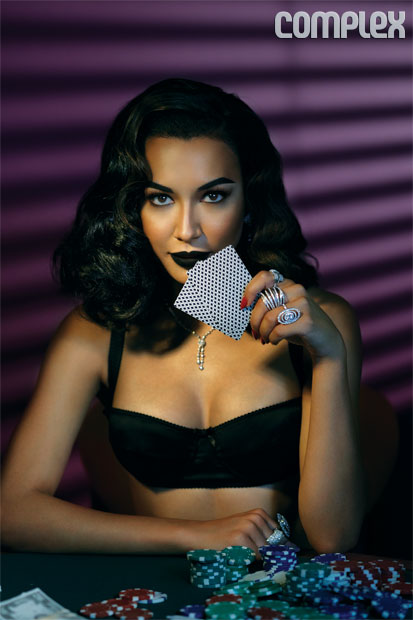
Tutto su Naya Rivera, l'attrice che quando bacia una ragazza il set è sold out (e che vorrebbe che Santana avesse una ragazza come Lena Dunham...)
Naya Rivera sits at a table at the outdoor patio of Coast, an oceanfront restaurant within the sunny Santa Monica hotel Shutters on the Beach. She’s waiting for her French 77, a cocktail made with champagne, a lemon twist, and St. Germain Elderflower liqueur.
She’s clad in a long black cotton dress and oversize sunglasses, with her hair in a bun, held in place by a black headband. Wearing just a touch of foundation and mascara, Naya doesn’t mean to intimidate, although it’s hard not to be taken aback by her beauty. She’s got the presence you’d expect of a celebrity: Her face is expressionless as she scans the emails on her phone one last time before burying it in her black Prada bag. Sitting tall with her legs crossed, she is quiet, collected, and perfectly postured. But the poised moment doesn’t last.
The waiter returns with bad news: “I’m so sorry, we don’t have any Elderflower on hand for your 77.”
“Oh no? It’s OK. I’ll just take house champagne then,” she replies graciously. Spotting a glass cylinder of plastic-wrapped sticks in the middle of the table, Naya asks, “Do you guys have sushi, too? Is that why there are chopsticks here?”
“Those are breadsticks,” the waiter says.
“Oh, breadsticks. Right,” Naya replies in a cartoonish voice, laughing with embarrassment as she sinks into her chair, hand held to her forehead.
“Trust me, honey, if we had sushi I’d be 10 pounds heavier,” the waiter says, trying to ease the tension. No need though; she’s already over it.
 
On Friday nights, me and my friend Madison would stand outside the liquor store and bribe older people walking by to buy us wine coolers to drink while we watched The Notebook.
 
The waiter treats her like he knows she’s a big deal, and he’s right—Naya Rivera’s got all the makings of a soon-to-be household name: She’s the biggest star on the Emmy-winning TV powerhouse Glee, amassing a cult-like fan base for her portrayal of feisty lesbian cheerleader Santana Lopez. She just finished filming her first movie, the horror flick Home, and she’s getting ready to drop her as-yet-untitled debut album. With her career on the verge of a major tipping point, you’d expect Naya to come equipped with some serious diva-type tendencies. So why the hell is she so cool? Perhaps it has something to do with the fact that she was working full-time as a babysitter when she got cast for Glee five years ago. “I was still a nanny up until the third episode of season one,” she recalls. “I didn’t work that much and I didn’t know if I would still be around.” She only quit her babysitting gig after show creator Ryan Murphy convinced the network to make her a series regular.
With such a rapid rise, Naya is still feeling her way around celebrity. “If I wasn’t famous, I’d be on OkCupid,” she says. “All my friends are.” But Naya is famous, and she’s doing pretty well for herself in the relationship department—as her Instagram feed and numerous red carpet photos of her and her boyfriend Big Sean can attest. But today she has a different lunch companion.
“I feel like we’re on a date,” she jokes, mockingly sitting up straight in her chair. “Dates are nerve-racking. They’re weird. They’re like interviewing someone. They’re torture.”
Although the 26-year-old’s daily existence keeps her deep in the heart of La-La land, Naya is determined to keep it real. “Is it weird that I just want hummus and pita?” she continues, ditching her sushi plans. “Which I don’t see here—what was I saying?” As she chats away about family, friends, and music (faves include Big Sean, of course, Future, Robin Thicke, Lil Wayne, and Major Lazer), it becomes clear that she’s the rarest of Hollywood types: a young starlet who’s genuinely down-to-earth. Just don’t mistake her kindness for weakness.
"Naya isn’t afraid to go for and speak to what she wants,” says her Glee co-star Dianna Agron, who plays head cheerleader Quinn Fabray on the show. “Maybe there was a time in her life when this wasn’t the case, but all I have ever seen is a fearlessness to entertain and to be who she wants to be.”
Naya Marie Rivera grew up in Valencia, Calif., a cookie-cutter Los Angeles suburb, with her mother, father, and two younger siblings, Nickayla, now an 18-year-old fashion model, and Mychal, a 22-year-old tight end for the Oakland Raiders. Her mother, Yolanda Rivera, a former model, got her firstborn daughter an agent “straight out of the womb.” Naya’s first gig was a KMart commercial where she crawled across the screen in a diaper. She followed that with a starring role on the quickly canceled sitcom The Royal Family, and guest spots on The Fresh Prince of Bel-Air and Family Matters.
Despite being on TV as a kid, Naya confesses that she didn’t have classmates lining up to be her friend—much less asking for her autograph. “I wish I had more fun in high school,” she says. “I wasn’t allowed to hang out with the black kids because they thought I wasn’t black enough, which was a problem.” Naya’s dad, George, is Puerto Rican and her half-German, half-African-American mother was strict, religious, and didn’t let her go out much. “On Friday nights, me and my friend Madison would stand outside the liquor store and bribe older people walking by to buy us wine coolers to drink while we watched The Notebook,” says Naya. She’s still a homebody who prefers to throw pool parties at her Los Feliz home rather than hit the clubs.
“I don’t understand how someone can be that funny, talented, and hot,” says her friend and Glee co-star Kevin McHale. It’s hard to believe Naya wasn’t a hit with the boys in high school, but she has her own horror story to prove it.
Naya’s prom date was a guy on the football team. “He started talking about how skinny I was,” she recalls. “All of his friends were like, ‘You need a thick girl.’ He was grinding on every other girl at the dance while I sat alone at the table, looking like a señorita.” She whips her head back and cups her hand to the side of her head, suggesting the ginormous flower she wore in her hair that night, à la Anita in West Side Story. “I didn’t even dance,” she says. “It was horrible.”
“Then he said, ‘So are you coming to the hotel?’ And I was like, ‘No, my dad is picking me up. On top of that, you’re trying to have sex with me? How rude are you?’” she says. The only time she speaks with her hands is when something pisses her off. Whoever that guy was, he must be kicking himself right now. But Naya insists she’s not bitter. “Best believe I’ll be at that reunion though.”
After lunch, which ends up being a plate of chips and guacamole, Naya heads to her weekly pedicure. Instead of her usual spot, she’s getting her toes done at ONE, a luxury spa in the Shutters hotel. The aroma of acetone and lavender permeates the private wood-paneled room, which is marked by two small porcelain tubs for soaking your feet. It doesn’t look like she needs the treatment. Her naturally bronze skin is so spotless you’d swear it was expertly Photoshopped. But she undoes the straps on her black Prada sandals anyway.
 
Kissing a girl was a little awkward just because we had a million grips, and all the guys wanted to visit the set that day. Heather and I just laughed it off.
 
“I love that they’re playing Billie Holiday,” she says, leafing through a copy of L.A. Confidential.
What begins as small talk between Naya and Traci, the older, aproned, African-American pedicurist, escalates into a history lesson about civil rights in L.A. “It’s like that with gay marriage now,” Naya remarks, sending Traci on a riff about Sir Lady Java, a 1960s transgender woman famous for her performances at the Redd Foxx Club. It’s not exactly a Zen topic, but Rivera doesn’t mind. She knows a thing or two about being a gay icon.
Ever since Glee’s 2009 pilot, Naya Rivera has played Santana Lopez, one of the most irresistible characters on television. She’s the show’s resident badass, capable of eviscerating anyone with her wit just as easily as she hypnotizes them with her palpable sexuality, which is as thick as the smog over Los Angeles. She’s also a lesbian—and it’s not just a phase. Her coming-out scene in season two became one of the hallmarks of the entire series. Santana’s relationship with her best friend, Brittany (played by actress Heather Morris), has been dubbed “Brittana” and it’s a frequent trending topic on Twitter. The pair are so beloved that their break-up last season sent many younger viewers into hysteria, some of whom sent death threats to Ryan Murphy.
“Having gay characters makes a difference, especially when you are a teenager and you need people to look up to,” Naya says as Traci nods in agreement. “Your world feels so small. The tiniest thing can make you think, ‘I’m gonna die!’ I’m glad Glee is around for people dealing with something that big in such a small world. It’s important.”
Despite Naya’s devout Christian upbringing, the announcement of Santana’s sexuality didn’t prompt her family to ship her off to Jesus Camp. “My mother believes in God but she’s the most nonjudgmental, cool person I know,” she says. “There was absolutely no problem.”
Nor did Naya have any apprehension about kissing her female co-star on camera. “Kissing a girl was a little awkward just because we had a million grips, and all the guys wanted to visit the set that day,” she jokes. “Heather and I just laughed it off.”
Santana seems to get hotter and hotter with each passing year. By the end of season four, she was doing her best Jennifer-Beals-in-Flashdance-meets-Piper-Perabo-in-Coyote-Ugly impression. That is to say, she dropped out of college to bartend and cage dance just to get by in New York, putting her hopes of becoming a professional dancer on hold. Oh, and she’s also girlfriend-less, which has left some former Brittana loyalists blogging about their ideal pick for Santana’s next lady love. Naya’s got her own ideas.
It would be funny if she had a girlfriend who had Lena Dunham’s personality,” she says. “She’s been crying for two seasons now. I’d like her to just have fun.”
Naya’s content to leave her character to the Glee showrunners as she begins her transition to the big screen. This year she wrapped her first feature film, the Nicholas McCarthy–directed thriller Home. “It was crazy,” Rivera says, laughing. “There were stunts and prosthetics involved, but there wasn’t much screaming. It’s not a jumpy film.” Instead, Home deals with demons and devilish behavior. “It’s more like, ‘That’s messed up.’”
Before she gets back in front of the camera—Glee starts filming season five in August—Naya’s busy recording her debut album, which she’s co-writing with Jaden Michaels, who’s worked with Carly Rae Jepsen and Cody Simpson.
As anyone who’s seen Naya perform Amy Winehouse’s “Valerie” on Glee will agree, the girl is no gimmick behind the mic. She credits her dad, a former Universal Music Publishing employee who’d sneak her into the studio to lay down demos when she was a teenager.
Naya describes her album as “feel-good music for hanging out,” comparing it to early Destiny’s Child. “If you were having a summer barbecue, this would be the perfect album to play.”
After the soaking and scrubbing and foot-filing, Traci asks what color Naya would like for her toes. She requests Big Apple Red, but then decides on Vodka Caviar instead. She needs something hot to fit tomorrow’s strip-poker themed shoot.
“I want to be like Betty White—90 years old and still killing it,” Naya says. “What keeps people like that alive?”
“She can’t retire,” Traci says. “She retires, she’ll die.”
Naya’s eyes light up at the thought. “Did we just predict my fate?”The next morning, Naya arrives in her white Range Rover at the West Hollywood photo studio, right on time for her cover shoot. After a couple of hours in hair and makeup, she tiptoes out of her dressing room looking like she hopped out of a 1960s Lucky Strike ad. Sipping on a glass of rosé through a pink straw, she waits for her cue. Her legs are thin and toned, like a Rodeo Drive mannequin. Her abs look like they’re straight out of a Pilates video. The crew around her whispers in awe.
 
I knew songs like ‘Ass’ because it was huge, but I never knew what [Big Sean] looked like. If I ran into him, I wouldn’t have known who he was.
 
Midway through the shoot, Big Sean shows up, dressed in an oversize camo jacket, dark jeans, and black adidas sneakers. As soon as the photographer calls for a break, Naya saunters over and engulfs him in a lingering hug. They don’t care who’s watching.
Naya first became aware of Sean through his music. “I knew songs like ‘Ass’ because it was huge, but I never knew what he looked like. If I ran into him, I wouldn’t have known who he was,” she says. “I was with my brother at his senior game in Tennessee and we were in his car going to get dinner. He played ‘Mula’ from Sean’s mixtape and I was like, ‘What is this song? Who is this?’ And he was like, ‘This is Big Sean.’ I said, ‘This is awesome, where do I get this?’” Before long she was hitting up Dat Piff for the first time. “It took me forever to get the music from my computer to my phone,” she recalls. She plays coy about how they actually hooked up though. “I ended up randomly meeting him. I told him that story the other day and we were still cracking up.”
Asked if Sean’s still as sensitive as the man who broke down in tears during his first major show in Detroit, Naya says: “He’s a sweetheart, but he’s not a little bitch.” She admits, though, that he “cried super hard” while watching Santana’s coming-out episode of Glee.
The pair has been together for a few months now. They make ample time for each other despite their hectic schedules. “With anything that you want, you’.
It'll work at it and make the time for it,” she says. Together, they can be spotted everywhere from the Hollywood red carpet to the Hawaiian coast.

“She’s the best thing that’s ever happened to me,” Sean says in almost a whisper, as she steps back in front of the camera. “She’s one of those people that you can connect to, and I think she’s going to be a superstar.”
He may be onto something. Whoever comes across Naya in person or on screen either wants to be her or be with her. She’s the kind of person you want to know more about, and she’ll gladly tell you. “I feel like I’m a pretty open person and I’m never purposely not going to share things because I don’t have anything to hide,” she says. “If I feel like shouting from the rooftops, then I’ll do it.” Here’s hoping she never loses her balance. (Agosto 2013)

venerdì 2 agosto 2013

QUIZ - Chi è la Miss Obama telefilmica?
Ci sono persone che per un credo politico son pronte a dar via il c...uore. Così deve essere per l'attrice telefilmica nella foto, pronta a "tatuarsi" il nome di Obama sul popò, o meglio sui pantaloni ben in evidenza durante una passeggiata a Los Angeles. Non stupisca, il fatto, quanto inorridisca se mai avesse proseliti. E se gli emuli italiani si stessero attrezzando come la Miss Obama? Per fortuna Brunetta o Calderoli han cognomi troppo lunghi per stare su una chiappa sola.

giovedì 1 agosto 2013


PICCOLO GRANDE SCHERMO – Katee Sackhoff, dalle stelle al western (e poi all’horror)
Katee Sackhoff è la protagonista femminile di “Longmire” (su Retequattro domani, venerdì 2 agosto, l'ultima puntata della prima stagione), western metropolitano di provincia così distante dal cult stellare “Battlestar Galactica” dove l’attrice ha conosciuto la popolarità. I suoi seguaci, non pochi (quasi 140.000 su twitter - @kateesackhoff), la potranno ammirare prossimamente nel futuristico “Riddick” con Vin Diesel e nell’horror soprannaturale “Oculus”, al fianco di Karen Gillian (“Doctor Who”), previsto nelle sale nel 2014. (Notizia tratta dalla Newsletter di QuiMediaset)

mercoledì 31 luglio 2013

venerdì 26 luglio 2013

PICCOLO GRANDE SCHERMO - Star dentro o Star Trek? JJ Abrams si teletrasporta fuori dall'Enterprise?

Articolo di Devin Faraci per "BadAss Digest"
Excellent sources have revealed to me that the new writers for Star Trek 3 have been found, and as expected Bad Robot is hiring from within the ranks of past collaborators. Continuing with the first two films' tradition of having writing teams, the script for Trek 3 will be written by duo Ashley Edward Miller and Zack Stentz. You know them as the guys who wrote the first Thor and who have a writing credit on X-Men: First Class. They also worked as writers and producers on Fringe, making them part of the Bad Robot family. They also have some Gene Roddenberry experience thanks to their work on the schlocky TV show Andromeda.
Don't get too excited about certain writers taking their hands off the property - Alex Kurtzman and Bob Orci are still on as writers. I heard that they were instrumental in making the decision about going after Stentz and Miller. What their day-to-day involvement moving forward will be I couldn't say.
Keep in mind this isn't a done deal, so it's possible that someone else could end up getting the gig. And there's no guarantee they're the final writers on the project. But as of right now it's Stentz and Miller's job to lose. And since Paramount wants this movie out in 2016 to mark the 50th anniversary of Star Trek, expect work to begin on it ASAP.
Speaking of losing jobs... why is it that I keep hearing tons of rumors that JJ Abrams is on the verge of dropping out of Star Wars? This has been something I've heard for a while now, and from multiple insiders. I know that he didn't want to shoot the movie in England and was overruled, but that happened a while ago. This weekend at Comic Con I continued to hear these whispers. No director for Trek 3 has been found yet - might Abrams end up coming back after all, leaving Star Wars to someone else? I'm expecting Star Wars news out of the German Star Wars Celebration at the end of the month - if there is some sort of announcement of a title or casting and Abrams isn't there, start wondering.
UPDATE: I just want to make it clear that I never said Abrams is leaving. I'm just saying that I have heard rumors from MANY sources that he's been considering/threatening it. Other web types have heard the same. We've all been hearing it for MONTHS. There have been a lot of other sites that have been running with this part of the story as if it's in stone, and it isn't even close.

giovedì 25 luglio 2013

NEWS - Basta! La "Golden age" è finita! Le serie tv non sono più superiori al cinema: "Slate" rilancia la sfida tra piccolo e grande schermo

Articolo di David Haglund per "Slate"
"Who was the first person to say that TV is better than the movies? It’s probably impossible to say, but the argument in its contemporary form may date to October 1995, when Bruce Fretts—with “additional reporting” from 10 (!) of his colleagues at Entertainment Weekly—offered, over several pages, “10 simple reasons why the small screen is superior” to the big one. Even if you didn’t read it at the time, the piece will feel strikingly familiar: Replace NYPD Blue and The X-Files with Mad Men and Breaking Bad and the argument made by Fretts is more or less identical in its essentials to the one that over the last six or seven years has appeared in Time, Newsweek, the New York Times, the Wall Street Journal, Vulture, Vanity Fair, Entertainment Weekly (again!), and on blogs too numerous to count.
But that bit of early-EW populist rabble-rousing was pre-Sopranos, when the Emmys were still dominated by the networks. The big awards players at the time were NYPD Blue, ER, and Picket Fences. (Pretty good shows, but come on.) Meanwhile, the movies that year brought us Toy Story, Before Sunrise, Heat, Clueless, Safe, 12 Monkeys, The Usual Suspects, To Die For, Dead Man, Kicking and Screaming, Casino, Seven, Welcome to the Dollhouse—not to mention the five movies nominated for Best Picture, a whole bunch of good films made overseas, and some excellent documentaries. Recently, one writer argued that 1995 was the “best year ever for movies.” Unlike this year, when the Emmy nominations remind us of the high quality of recent television shows, it was flatly ridiculous to argue for TV’s superiority in 1995.
It would seem, then, that a subset of cultural critics has wanted to make the TV-is-better argument for a long time, well before it was even remotely plausible—and for reasons having little to do with the artistic merits of the best TV shows and the best movies. But why?

On some level, of course, the whole argument is absurd. People will tell you that the dozens of hours TV shows devote to their characters make those characters richer than their cinematic counterparts—but dramatists have known for literally centuries that you only need one night to create a character people will never forget. TV boosters note again and again that, on cable, the writer is king—something I certainly appreciate as a writer. But why is it better for writers, rather than directors, to have final say in what is ultimately a visual medium? And besides, no critic watches enough television and movies to compare the two media with any thoroughness. (One wonders how many of the movies from ’95 listed above that Bruce Fretts, the EW writer, had seen. He keeps bringing up Showgirls.) What’s more, it is becoming harder and harder to keep up: There are so many cable networks and so many movies getting made every year—and the old “it never played here” excuse no longer works for the littler movies, thanks to video-on-demand and DVDs and so on.
And that, it occurs to me, is precisely the point: The TV-is-better argument is, above all, an attempt to narrow the range of what sophisticated viewers feel obligated to watch. Yes, such polemics sometimes serve other purposes. (Shaming Hollywood studios out of making another board-game-inspired blow-’em-up and turning to taut, Breaking Bad–style thrillers instead, for instance.) But generally the TV-is-better argument is a way of saying, “I don’t have to keep up with the movies anymore, and neither do you.”
That this is what’s really going on was brought home for me while reading Brett Martin’s very enjoyable new book, Difficult Men: Behind the Scenes of a Creative Revolution, all about TV’s post-Sopranos golden age. In the prologue, Martin writes that the prestige cable drama is “the signature American art form of the first decade of the 21st century, the equivalent of what the films of Scorsese, Altman, Coppola, and others had been to the 1970s or the novels of Updike, Roth, and Mailer had been to the 1960s.” Put aside, for a second, the overwhelming maleness of that list (though it’s not entirely incidental). Put aside, too, the fact that Norman Mailer wrote his best novels before the 1960s had begun and Roth wrote his well after that decade was over. Focus instead on this idea that there is, at any one point, a single “signature American art form.” That’s a ridiculous notion. And Martin goes a step further later on in the book: “Men alternately setting loose and struggling to cage their wildest natures has always been the great American story,” he declares, “the one you find in whatever happens to be the ascendant medium at the time.” The great American story? You mean there’s only one?
Critics who claim that TV is better than the movies now would generally, it seems, prefer that there only be one. And when it comes to quality, TV remains, for the most part, a great simplifier. Ask nearly any professional critic—not to mention many amateur ones—for the best TV shows of the last decade or so, and you will get a very familiar list, starting with The Sopranos and ending, probably, with Breaking Bad, or maybe, say, Homeland or The Americans. You will almost certainly have heard of every show. You are not likely to encounter the sometimes bewildering variety that a collection of film critics is likely to present you with.

And there are good reasons for that. For one thing, when we talk about television, we are almost always only talking about American television. Maybe we’ll include a few British shows, but rarely do we grapple with foreign-language efforts, the way serious moviegoers have been doing for decades. And while the source of most cinematic creativity in the United States has for the last few decades probably come from independent filmmakers, there is not really any such thing as independent television. (The medium, for the most part, just doesn’t work that way.) So while the best movies come from an intimidating diversity of sources, and present a similarly wide range of aesthetic approaches and aims, the best TV shows tend to come from three or four American cable networks and frequently follow a familiar model. (It’s like The Godfather, only in modern-day New Jersey—or in the advertising world, or the New Mexico meth market, or in Hollywood …)
Take today’s Emmy nominations, which, though there were, as always, a few surprises and snubs, generally rewarded the prestige dramas—House of Cards, American Horror Story, Game of Thrones, Mad Men, Breaking Bad, Homeland—that most people regard as the best stuff on TV. Compare that to any year’s Oscar nominations, which encompass multiple filmmaking styles and span the studio and indie world and still rarely scratch the surface of what critics and serious moviegoers consider the best of the year. Or just consider the wild range of movies on view in a critics’ poll of the best 2013 movies so far, from Before Midnight to Upstream Color to Spring Breakers (and that’s just the top three—and we’re still months away fr
om Oscar season).
It may be true that, for much of the year, you can’t find good movies just by driving to the multiplex, while there’s often something good waiting on your DVR. And that people aren’t talking enough about the really good films that get released—sometimes on only a handful of screens—throughout the calendar year. But the proper solution to this problem, if you’re a critic, is not to tell people to just watch TV instead. It’s to tell us which new movies are worth our attention, and where they can be found. It’s to make the conversation about the art that matters the most.
After all, the most consistent refrain from TV-is-better pieces is: Everyone is talking about that great, culture-dominating TV show, and nobody talks about the movies anymore. (Bruce Fretts’ “simple reason” no. 5: “TV is more fun to talk about.”) In Vanity Fair, James Wolcott—who finds the TV-is-better argument so nice he’s made it twice—says “the new movie that everybody’s talking about is being talked about by a shrinking number of everybodies.” Gavin Polone opens his piece for Vulture by noting that in one day he heard three random strangers talking about Breaking Bad. In the New York Times, A.O. Scott asks, “Will any of the movies surfacing this fall provoke the kind of conversation that television series routinely do, breaking beyond niches into something larger?”
In fact, plenty of recent movies have inspired a great deal of cultural conversation. (Zero Dark Thirty, Django Unchained, and Lincoln come quickly to mind.) But more importantly, when it comes to the real artistic merit of what we’re watching, the volume of such conversations is neither here nor there. You know what people talk about even more than Breaking Bad? Sports. I can discuss football, baseball, and basketball with huge numbers of people from all walks of life. But that doesn’t make the last Red Sox–Yankees tilt a work of art (especially not lately).
What bothers me most about the TV-is-better line, finally, is that TV could be better. As this year’s many Emmy nominations for Netflix series helps to demonstrate, we now watch a lot of “television” and “movies” in the same way: at home, on big TV screens and little computers. Behind the Candelabra, which got 15 Emmy nominations, is an HBO presentation in the States—and a movie overseas, where it is playing on the big screen. The gap between these two media is closing—and there’s no reason, theoretically speaking, that the adventurous approaches to visual storytelling that we see in certain movies couldn’t come to TV, too. We could all start watching more foreign-language shows—I hear Borgen is great—and more independently produced Web series, which get better all the time. We could, in other words, eventually have a television landscape that is as artistically rich and varied as the movies are right now. And that would be a true golden age".

mercoledì 24 luglio 2013

GOSSIP - A Giffoni la Naya è d'obbligo! La star più in auge di "Glee" sbarcata in Italia vestita da glee-adiatrice...

martedì 23 luglio 2013

NEWS - Royal Baby: Kate e William, seguite il decalogo di "Game of Thrones"!

Articolo di Darren Franich per "Entertainment Weekly"
"It’s official: The Duchess of Cambridge has given birth to the future monarch of the United Kingdom. Of course, as I write this mere moments after the blessed event, very little is known about the newest member of the House of Windsor. Will the little prince have its mother’s good looks or its father’s good looks pre-baldness? Where does it stand on the phone-hacking controversy? Will he marry North West or Blue Ivy Carter?
One thing’s for sure: The royal baby is going to have a wild life ahead of him. He’ll probably live for at least a century, if the genes are any indication. He will need to learn some valuable lessons. And what better place to begin the Royal Baby’s education than Game of Thrones, a TV show about crisscrossing royal bloodlines and fancy accents? Like the George R. R. Martin books that inspired it, Thrones is set in Westeros, which is basically England in the Middle Ages with more dragons and fewer magical swords. Here are ten lessons that’ll guarantee that King No-Name doesn’t lose his head, metaphorically speaking.
1. Stay on good terms with your family members. All of your family members. Siblings, parents, uncles, even embarrassing cousins. Seriously, you have to spend the rest of your life with these people, and if you aren’t careful, one of them might send their illegitimate magical shadow-baby to stab you in the back.
2. When traveling, it’s always better if you can speak the local language. Daenerys Targaryen — aka Daenerys Stormborn, aka Khaleesi, aka Dragon Lady — spends most of her days traveling from foreign city to foreign city. Local lords always think they can fool her. But she speaks the local language and studies the history of every spot she visits; very often, she becomes more popular with the local citizens than their own government. (Sometimes, she becomes the local government.)
3. Pay attention to your subjects in the outer provinces. Because everyone on Game of Thrones is too busy with the palace intrigue in Game of Thrones, nobody ever pays any attention to the poor Night’s Watch, even though they keep sending increasingly-urgent messages about an army of attacking ice-zombies. What I’m saying is, don’t forget about Canada, okay?
4. Don’t trust eunuchs. Although they make excellent bodyguards.
5. Don’t trust your friends. They will betray you.
6. Don’t trust your enemies. They don’t play fair.
7. Actually, don’t trust anyone. Especially not in Vegas.
8. Winter is Coming. Since you live in England, it’s pretty much always winter. Put on a coat!
9. The man who passes the sentence should swing the sword. Since you have no actual political power, the moral of this lesson is basically that you should carry a sword on you at all times. You’re royalty, gosh darn it! If you can’t carry a sword, who can? You think Prime Minister David Cameron can wield a sword? Yeesh, speaking of eunuchs, amiright? #BritishPoliticalHumour
10. Do not have sex with anyone in your immediate family. Because something like this could happen.

lunedì 22 luglio 2013

L'EDICOLA DI LOU - Stralci, cover e commenti sui telefilm dai media italiani e stranieri


sabato 20 luglio 2013

TWITTER-JAM - Speciale "Il Gioco dei Telefilm", il gioco da avere sotto l'ombrellone all'insegna delle serie tv


"Il trivial game + divertente dell'anno" (Lucca Comics)

"Il trivial game + divertente dell'anno" (Lucca Comics)
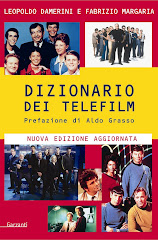
Il GIOCO DEI TELEFILM di Leopoldo Damerini e Fabrizio Margaria, nei migliori negozi di giocattoli: un viaggio lungo 750 domande divise per epoche e difficoltà. Sfida i tuoi amici/parenti/partner/amanti e diventa Telefilm Master. Disegni originali by Silver. Regolamento di Luca Borsa. E' un gioco Ghenos Games. http://www.facebook.com/GiocoDeiTelefilm. https://twitter.com/GiocoTelefilm

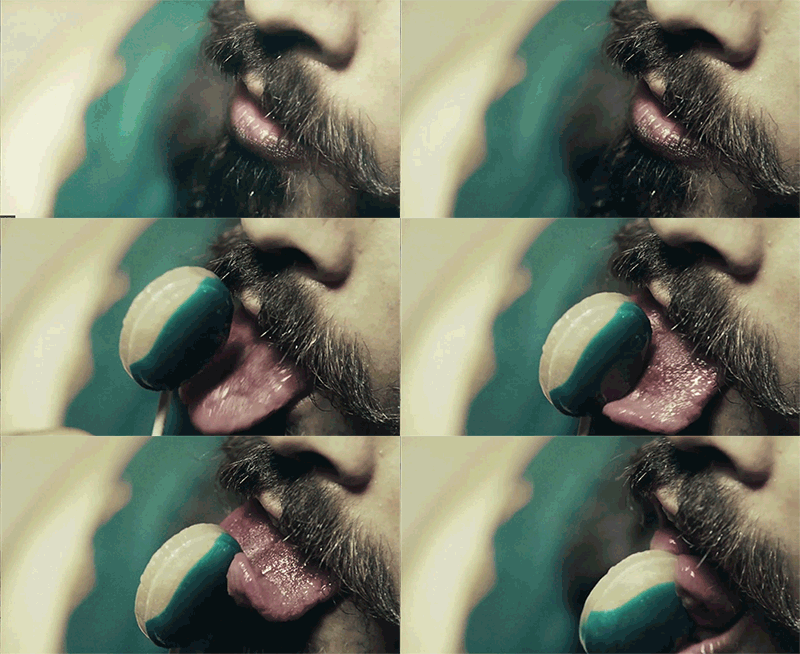
Lick it or Leave it!

Lick it or Leave it!